A3TS Innovation Award 2026
A3TS 2026 Innovation Award: GranulX—When Tribofinishing Is Calculated Rather Than Trial-and-Error
An award that recognizes exhibitors' development efforts
Presented annually during the A3TS conference, the Innovation Award recognizes a company whose development efforts directly contribute to the industry’s performance. It is open to any exhibitor at the trade show who is registered with the association—whether a company or a research organization.
Entries are evaluated by a multidisciplinary jury of three to four members, appointed by the executive committee of the organizing regional chapter, based on the written application and interviews conducted during the trade show. The jury determines the weighting of four criteria: the level of technological innovation, industrial maturity,the expected impact on industrial performance, andthe expected impact on environmental performance.
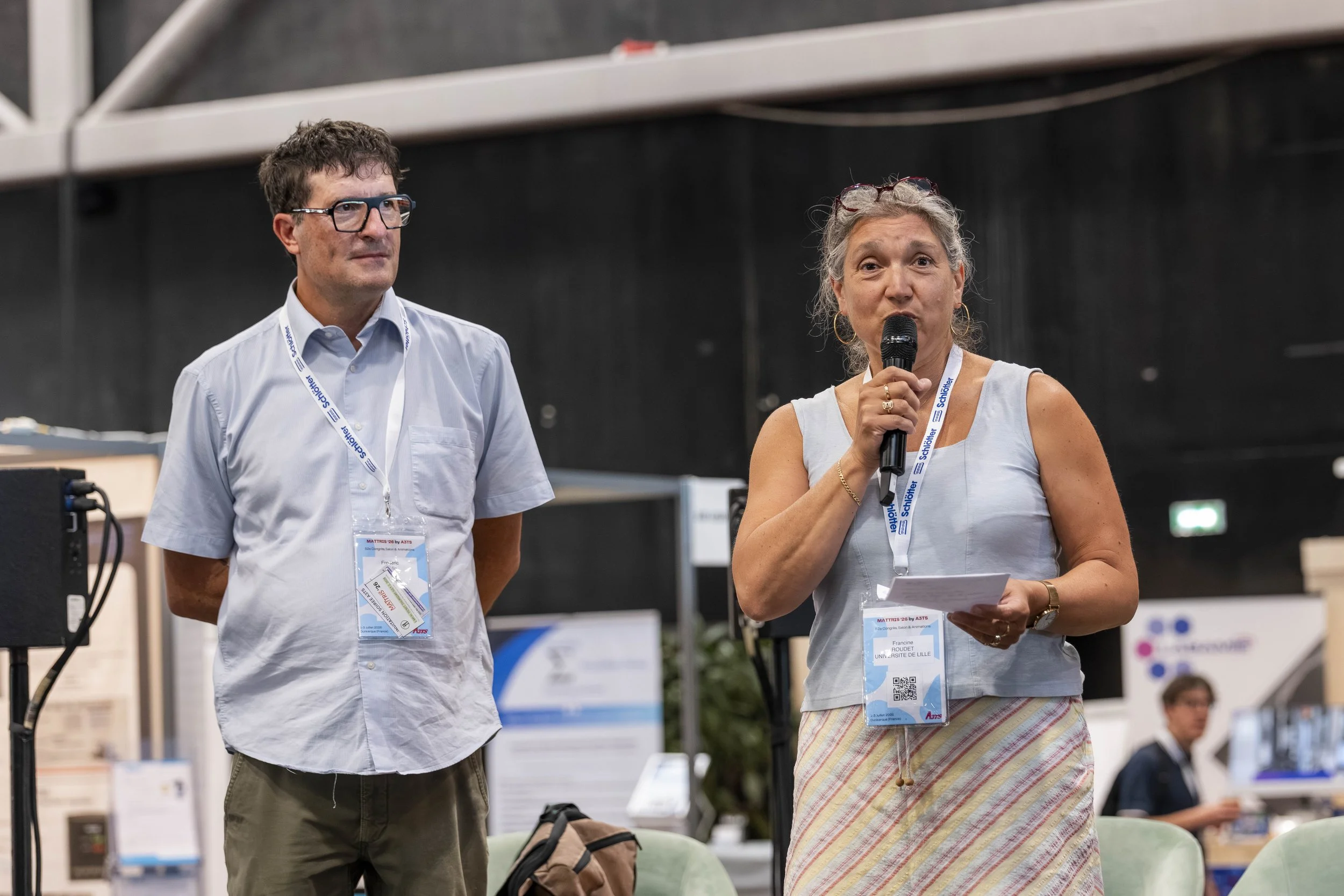
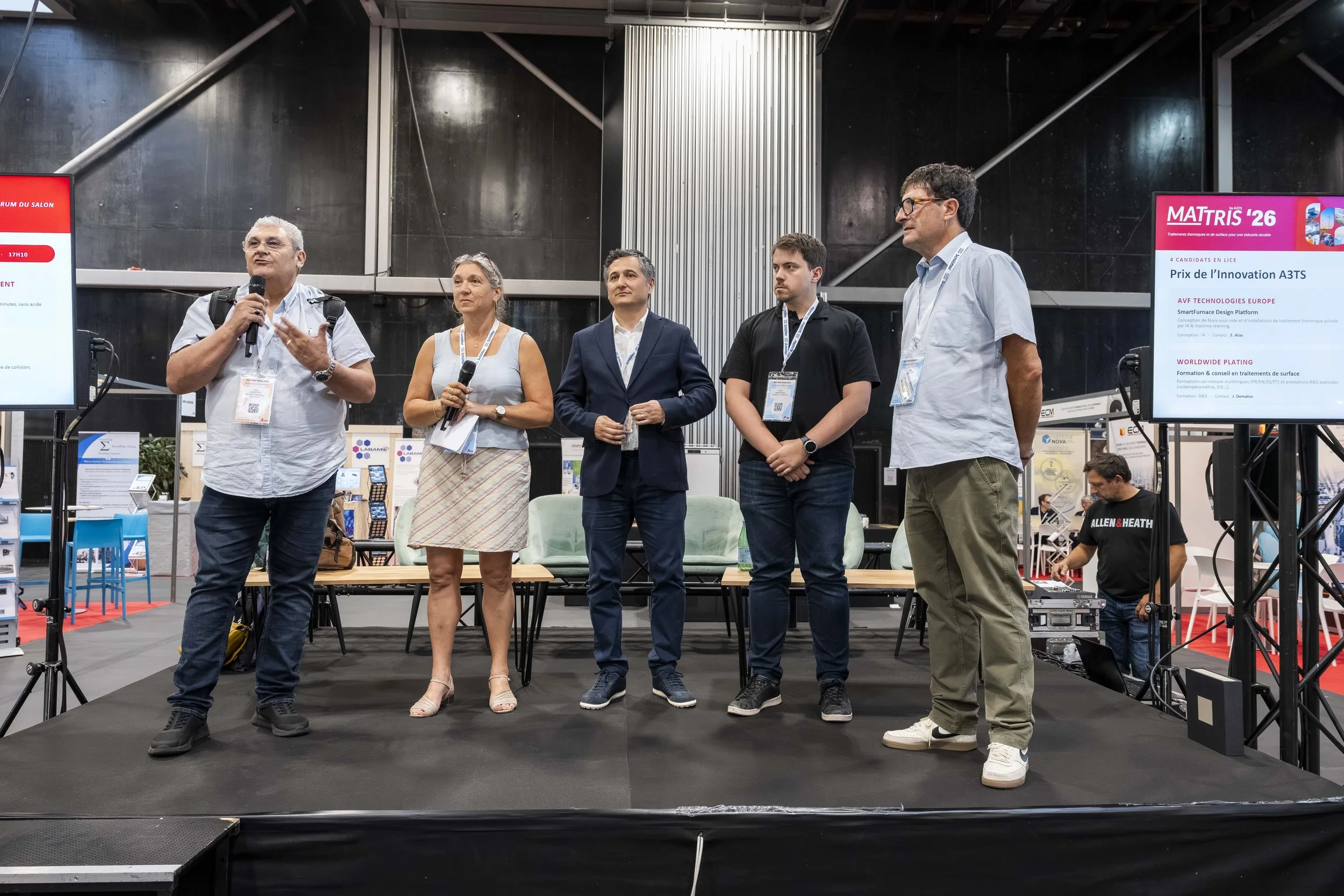
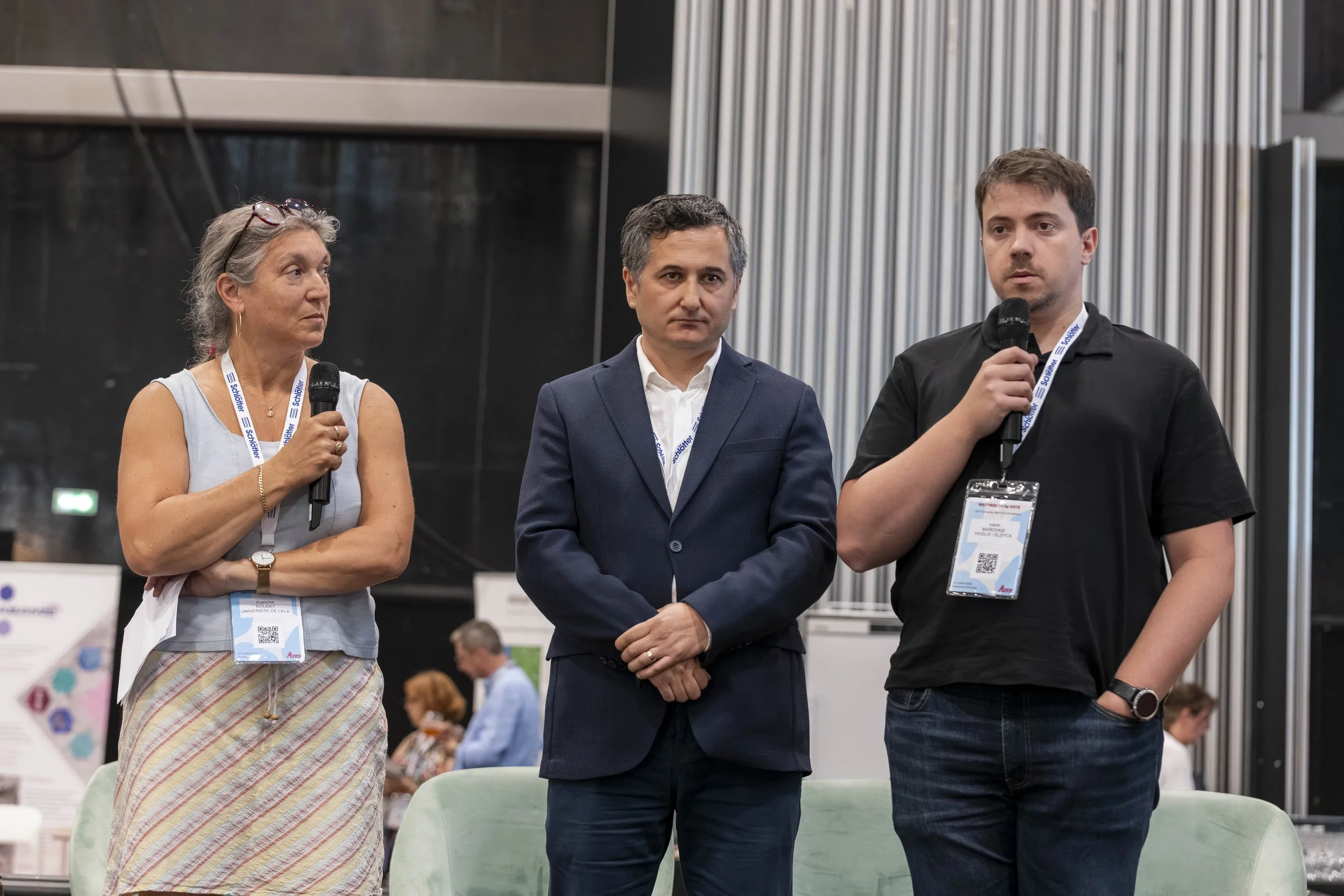
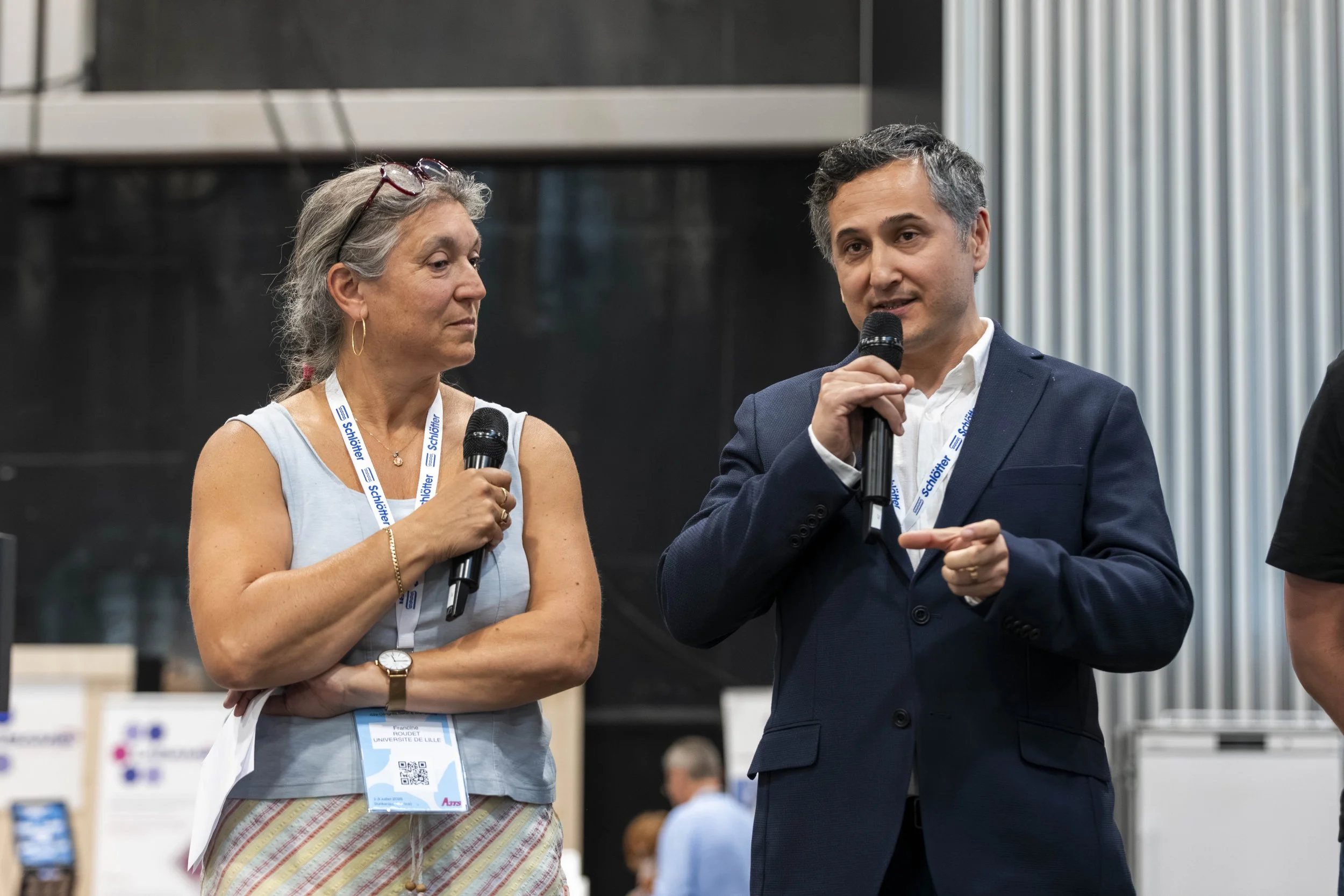
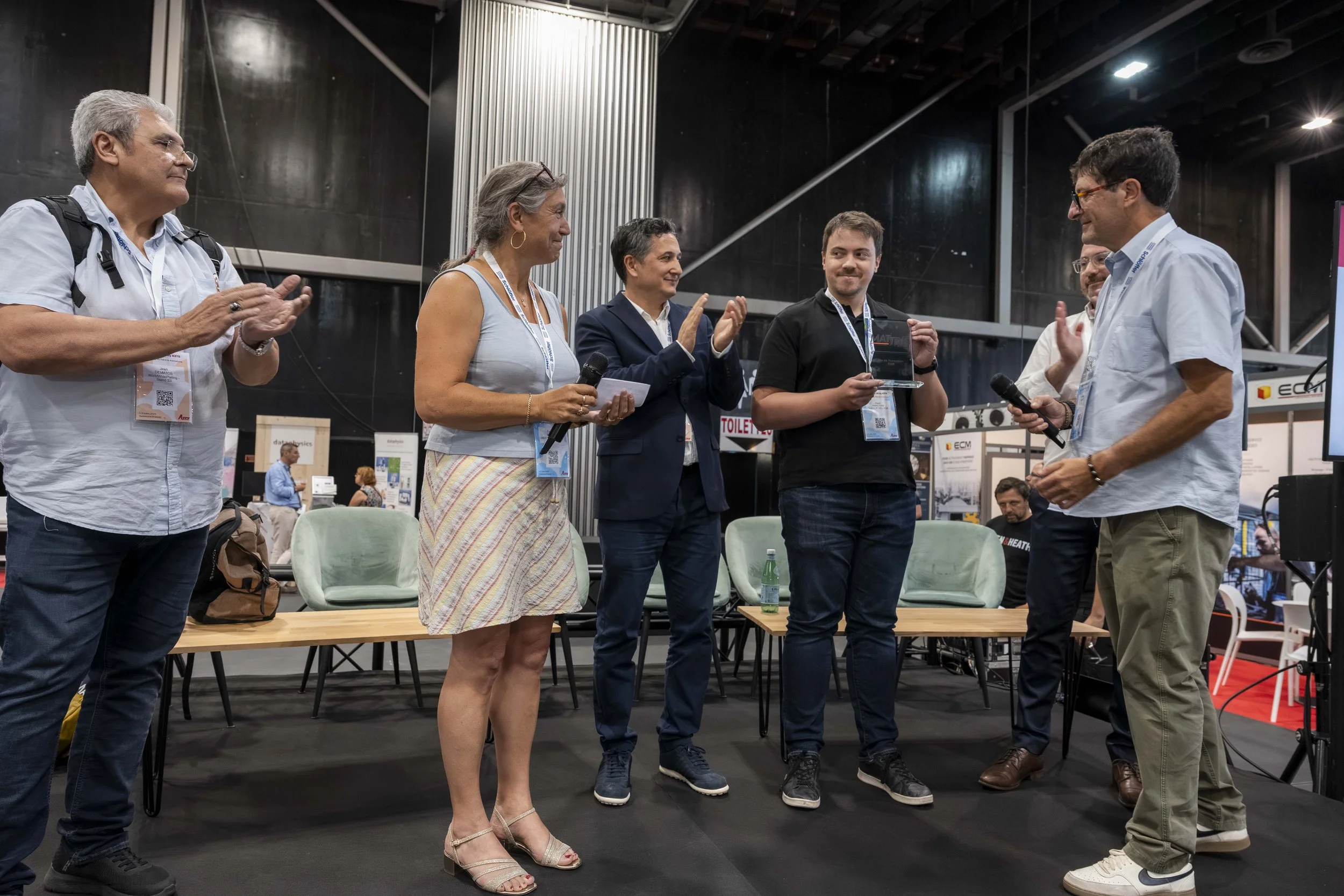
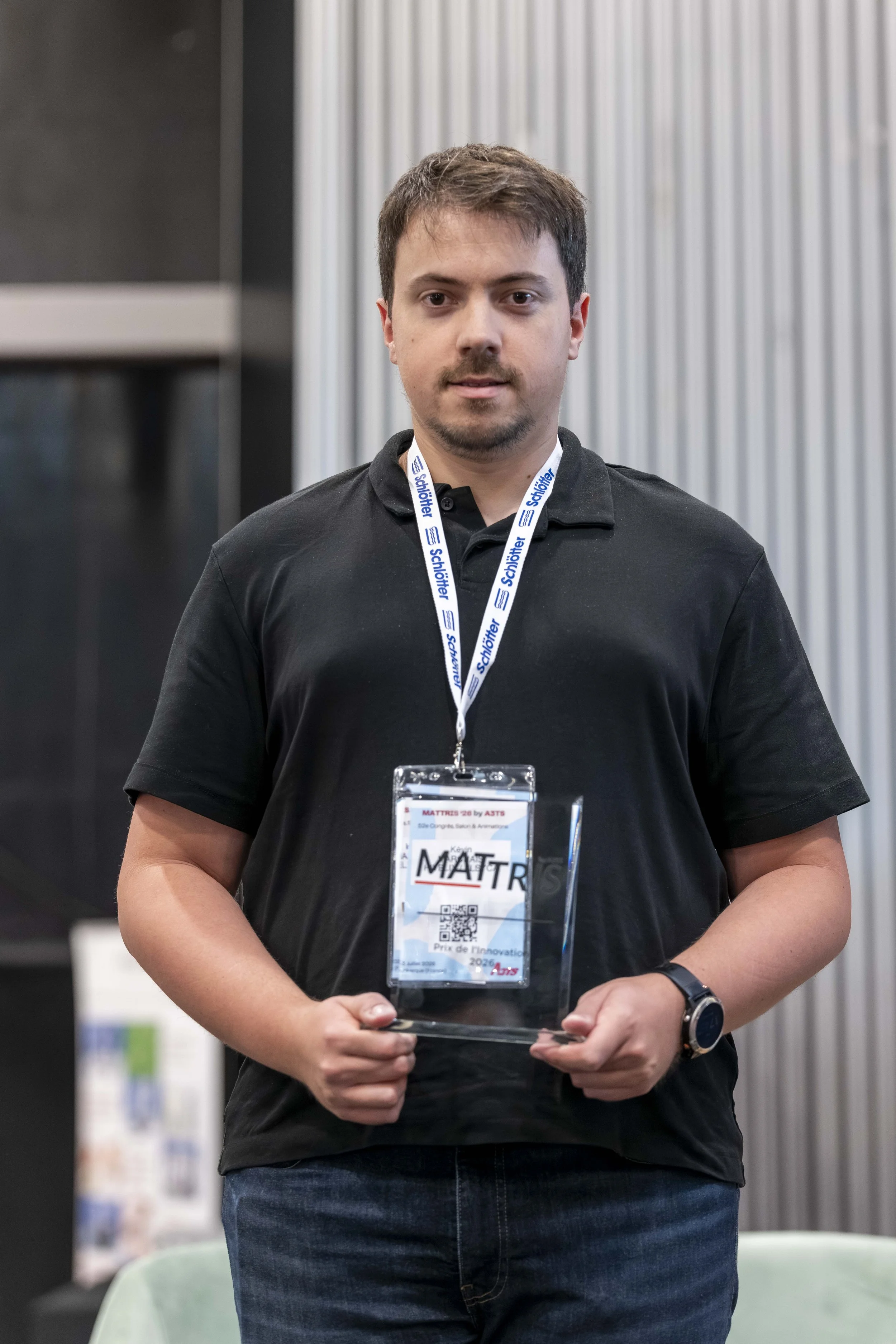
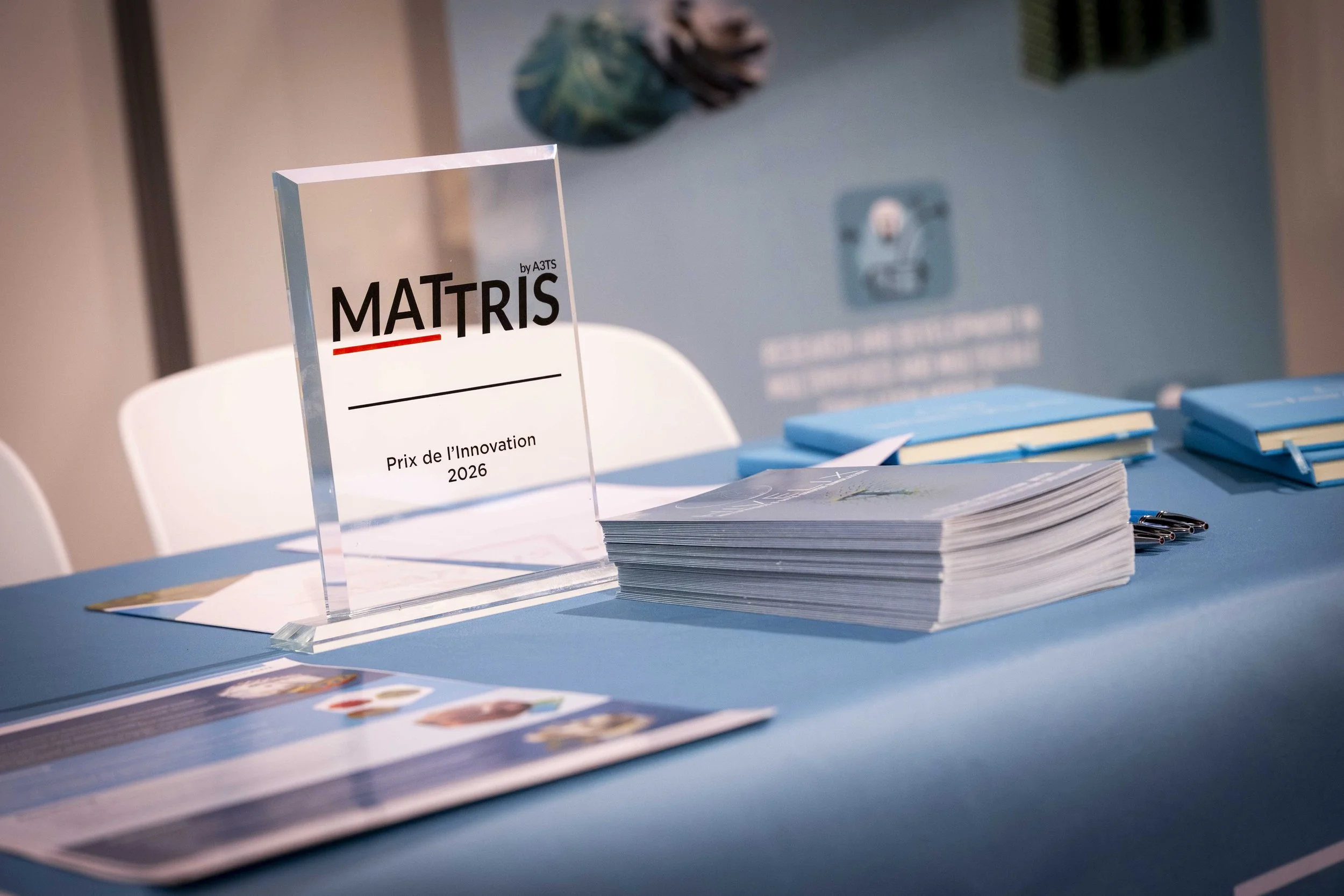
For the 2026 edition, four entries were in the running. The award was presented late in the afternoon on Wednesday, July 1, at the trade show forum, just before the exhibitors’ cocktail reception, by members of the A3TS France Nord Belgique regional chapter.
GranulX — HIVELIX and ELSYCA
Tribofinishing is one of those processes in which the operator’s experience has long served as the model. We know what works, but rarely why: the workpiece, the media, the vibration amplitude, and the cycle time form a system whose behavior is adjusted through successive trials, and whose key parameters cannot be measured—a dense granular medium cannot be instrumented.
GranulX offers to calculate this. It is a GPU-accelerated discrete element method (DEM) simulation software developed by HIVELIX, a company within the ELSYCA Group. For industrial cases involving several million particles, it predictscollision energy, surface coverage, andimpact angle by working with real-world part geometries, non-spherical media, and taking into account vibrations and imposed motions.
GPU acceleration is what makes this exercise feasible. Until now, a DEM simulation on this scale was the domain of research computing; here, it becomes a debugging tool that can be used in an industrial setting—and on a workstation, not on a computing cluster. The cases studied range from water wheels to brake pedals, including knee implants, vibrating bowls, and rotating drums.
In other words: optimize a process before starting the tests, not after. The tool is being presented as an advanced prototype.
During the “Heat Treatments” session of the conference, the HIVELIX teams also presented a paper on the numerical simulation of surface treatments in granular media, applied to the optimization of parameters on an industrial scale.
Simulation · GPU-Accelerated DEM — Contact: Baptiste Fedi — contact@hivelix.io
Read more
-
It focuses on industrial processes such as tribofinishing and smuritropy, as well as vibrating bowls and rotating drums. It is particularly applicable when physical testing is costly or difficult to set up.
-
GranulX is an advanced demonstrator that has been validated in three ways: qualitatively using a representative industrial case study, quantitatively through comparison with open-source DEM software, and analytically using specific test cases. Case studies include simulations of impellers, additively manufactured parts, implants, vibrating bowls, and non-spherical media.
-
It reduces the number of experimental trials and accelerates the optimization of process parameters. The impact is measured by development time, the number of trials, the uniformity of the treatment, the scrap rate, and by the simulated collision, coverage, and wear fields.
-
The technology is based on a GPU-accelerated DEM solver capable of simulating millions of particles using real-world meshed parts and non-spherical media. Three challenges: developing accurate wear laws, computation time, and optimizing simulations using deep learning methods. The alternatives are experimental testing, empirical models, and general-purpose DEM solvers, which are more limited for this application.
-
Yes, by reducing experimental testing, machine hours, consumables, and scrap—as measured by the energy per conforming part, media consumed, and the number of tests avoided. The computational footprint itself was also taken into account: the simulations run on a workstation equipped with a GPU, whereas comparable DEM tools require servers or computing clusters.
The three other innovations in the running
The diversity of the 2026 entries is worth noting: four fields—equipment design, metallography, numerical simulation, and knowledge transfer—and four stages of development, ranging from projects not yet open to customers to systems already on the market. The award is not limited to equipment manufacturers.
AVF TECHNOLOGIES EUROPE — SmartFurnace Design Platform
A design platform for vacuum furnaces and heat treatment systems. The user enters a few general parameters and receives an optimized design solution; the platform covers everything from individual furnaces to complete systems, and generates exploded views for assembly and disassembly procedures.
In what contexts is innovation being considered?
Computer-Aided Design, Machine Learning, and Artificial Intelligence.
What level of maturity? What industry benchmarks?
The project is being tested on certain oven models, but is not yet available to customers.
How does it contribute to industrial performance?
Even someone without in-depth knowledge of vacuum furnaces can quickly access a design and all related information: bill of materials, list of suppliers, and installation requirements—from a single component to a complete design.
Technological content, challenges addressed, competing solutions
The system will initially be based on furnace designs already developed by AVF. Subsequent phases will include real-time remote connectivity with the furnaces and facilities, as well as an automatic design function powered by artificial intelligence.
Does it improve the user's environmental impact?
Yes: Designing a furnace and a system will no longer take several months, and the system will suggest ways to save energy.
Design · AI — Contact: Serkan Atas — info@avftechnologies.com
__________________________________________________________________________
BUEHLER, ITW Test & Measurement GmbH — NEO TERRA
NeoTerra prepares metallographic samples in just a few minutes using acid-free TerraBlend solutions. You select the material, a preprogrammed method, and the area to be etched, then start the process: a nozzle applies an electric current along the defined area, eliminating many of the traditional polishing steps. The system includes a washing function and recirculates the solutions in a closed-loop system. The most noticeable practical benefit: laboratories can etch their samples without a fume hood.
In what contexts is innovation being considered?
Sample preparation for microstructural observation.
What level of maturity? What industry benchmarks?
Marketed.
How does it contribute to industrial performance?
Two benefits: no chemicals are used, which means greater safety, and time savings during preparation. The results are consistent across operators, which reduces reliance on individual experience.
Technological content, challenges addressed, competing solutions
Perform polishing and electrolytic etching without chemicals. No competing solution offers chemical-free etching.
Does it improve the user's environmental impact?
To be clear: no chemicals, safety data sheet with no pictograms, approved for discharge into the sewer system, and can be used without a fume hood.
Metallography — Contact: Geoffrey Chatelain — geoffrey.chatelain@buehler.com
__________________________________________________________________________
WORLDWIDE PLATING - Training and Consulting in Surface Treatment
The only application that does not involve a product. WorldWide Plating combines customized training—for operators, technicians, and engineers, in French, English, Spanish, and Portuguese—with advanced R&D services: voltammetry, chronopotentiometry, and electrochemical impedance spectroscopy. The focus of this application is knowledge transfer: making the science of surface treatments applicable in the workshop.
In what contexts is innovation being considered?
Three complementary areas of focus. Educational: making technical training accessible to everyone, from operators to engineers, in four languages and through various formats—in-person, distance learning, and e-learning. Technological: integrating advanced electrochemical methods into practical industrial protocols to address issues related to corrosion, deposition, and process optimization. Industrial: addressing the competitiveness challenges faced by manufacturing facilities—costs, quality, and environmental compliance.
What level of maturity? What industry benchmarks?
The training program is at TRL 8–9, having been deployed and validated in industrial settings with SMEs and major corporations in the aerospace and automotive sectors, both in France and Mexico. The R&D program is at TRL levels 6–7, with demonstrators operating under real-world conditions—optimization of treatment baths using voltammetry and impedance spectroscopy. Partnerships with French and Mexican universities through the MEXFITEC program; clients in the aerospace, microelectronics, and connectivity sectors, including subcontractors for Airbus and Safran. Qualiopi certification is currently being obtained.
How does it contribute to industrial performance?
Four key areas: Productivity, achieved by reducing downtime, operational errors, scrap, and rework; the quality of processed components, with impedance spectroscopy and voltammetry enabling precise characterization of coatings—as measured by the non-conformance rate and the service life of the deposits.Agility, particularly in response to regulatory substitutions for hexavalent chromium and cadmium. Finally, retaining skilled workers, as a better-trained workforce leads to lower turnover.
Technological content, challenges addressed, competing solutions
Two pillars: remote e-learning modules and hands-on workshops in real-world conditions, either in the lab or at the client’s site. The main challenge was to adapt electrochemical techniques—typically confined to academic research—for use in industrial settings, which led to the development of turnkey protocols validated under real-world conditions. Second challenge: maintaining consistent educational quality across all four languages through standardized materials. In the face of competition, the company aims for a middle ground—generalist training organizations lack niche expertise, R&D consulting firms rarely transfer know-how, and e-learning platforms do not offer personalized support.
Does it improve the user's environmental impact?
Yes, in three ways: process optimization—energy, raw materials, water consumption, and reduction of discharges through improved control of plating baths; support for the substitution of hexavalent chromium and cadmium with REACH-compliant alternatives; and the integration of ISO 14001 and REACH modules into training programs. The selected performance metrics are carbon footprint, bath recycling rate, and regulatory compliance.
Training · R&D — Contact: Jean Dematos — jean.dematos@worldwideplating.com
Apply in 2027
Are you exhibiting in 2027? You're eligible for the award
The 2027 Innovation Award will be presented in Orléans. Any exhibitor at the trade show registered with A3TS is eligible to enter the competition, including both companies and research organizations. Application forms are available online on the conference website or upon request from the association’s secretariat.
The application consists of a five-line summary, five questions, and an image. The nominated innovations are featured in a promotional campaign leading up to the trade show, as part of the event’s communications plan—so simply entering the competition already provides exposure, regardless of the outcome.
What the winner receives
• The trophy, presented at the trade show forum
• A one-year promotion on the A3TS website: the logo and the phrase “Winner of the Innovation Award,” along with a link to the company’s website
• A half-page editorial in the special issue of *Traitements & Matériaux* magazine dedicated to the event
• An editorial in A3TS Contacts magazine
• A press release distributed to trade journals
• A 30% discount on the booth price at next year's trade show
Email us to apply: a3ts@a3ts.org