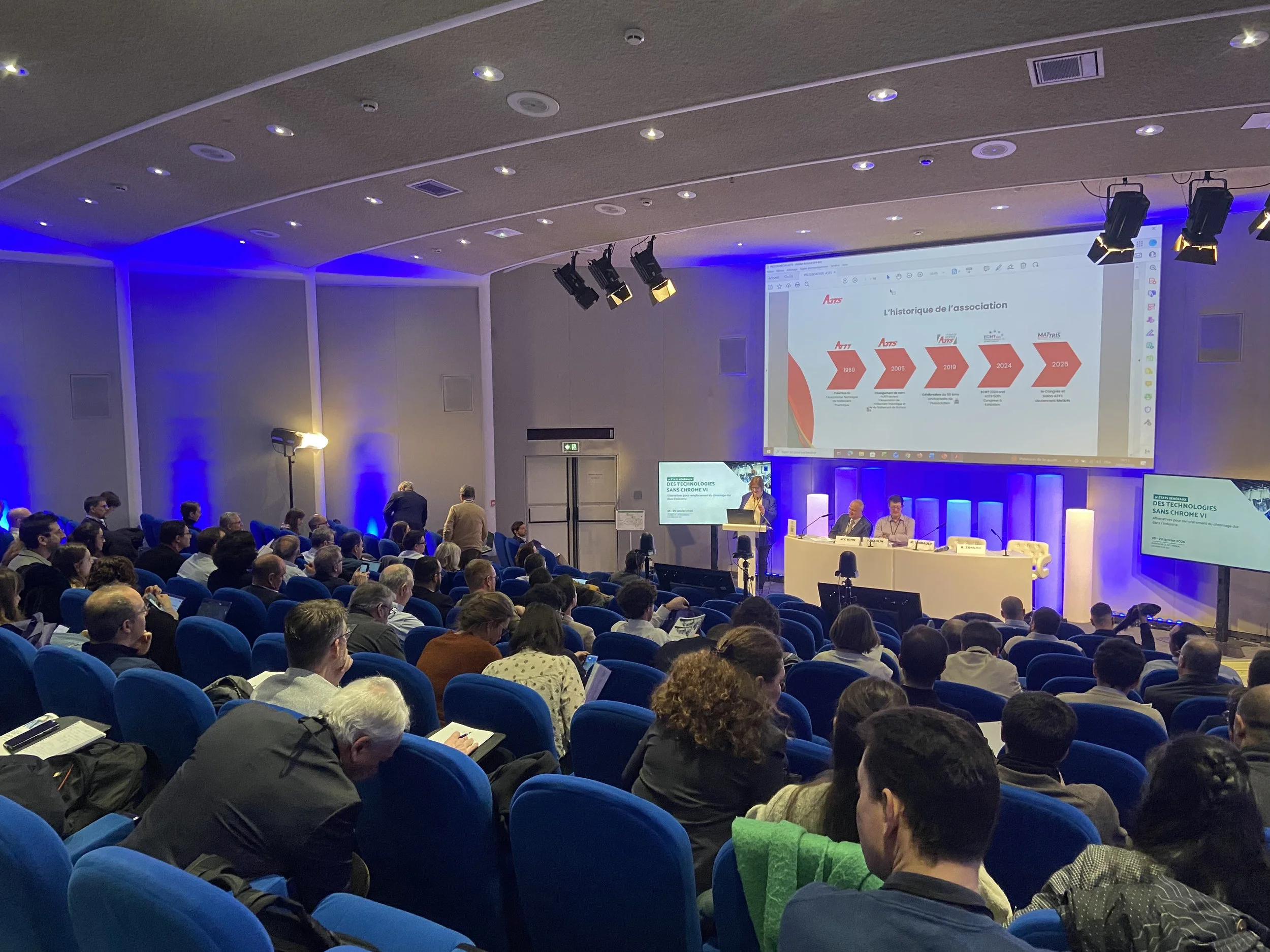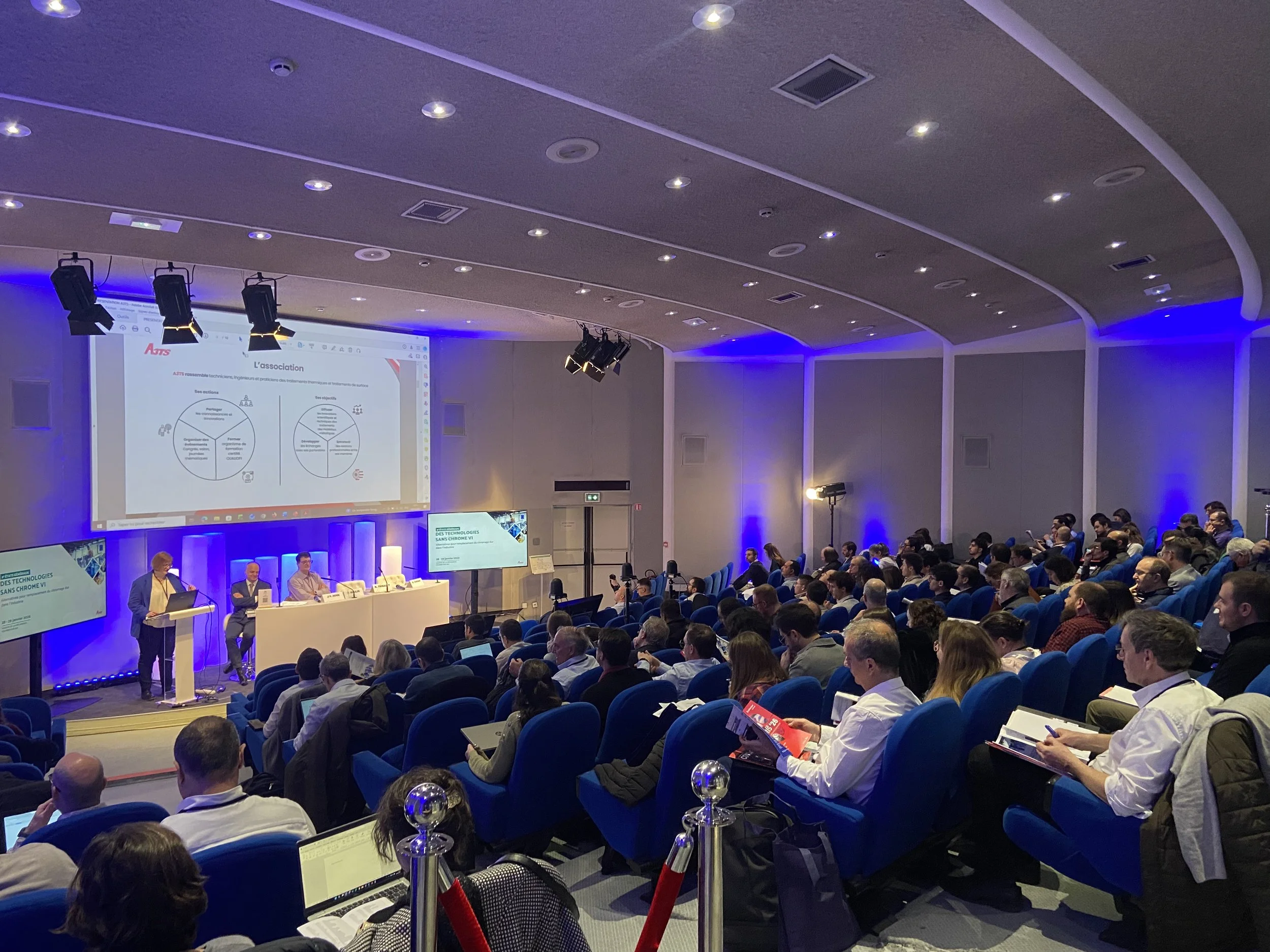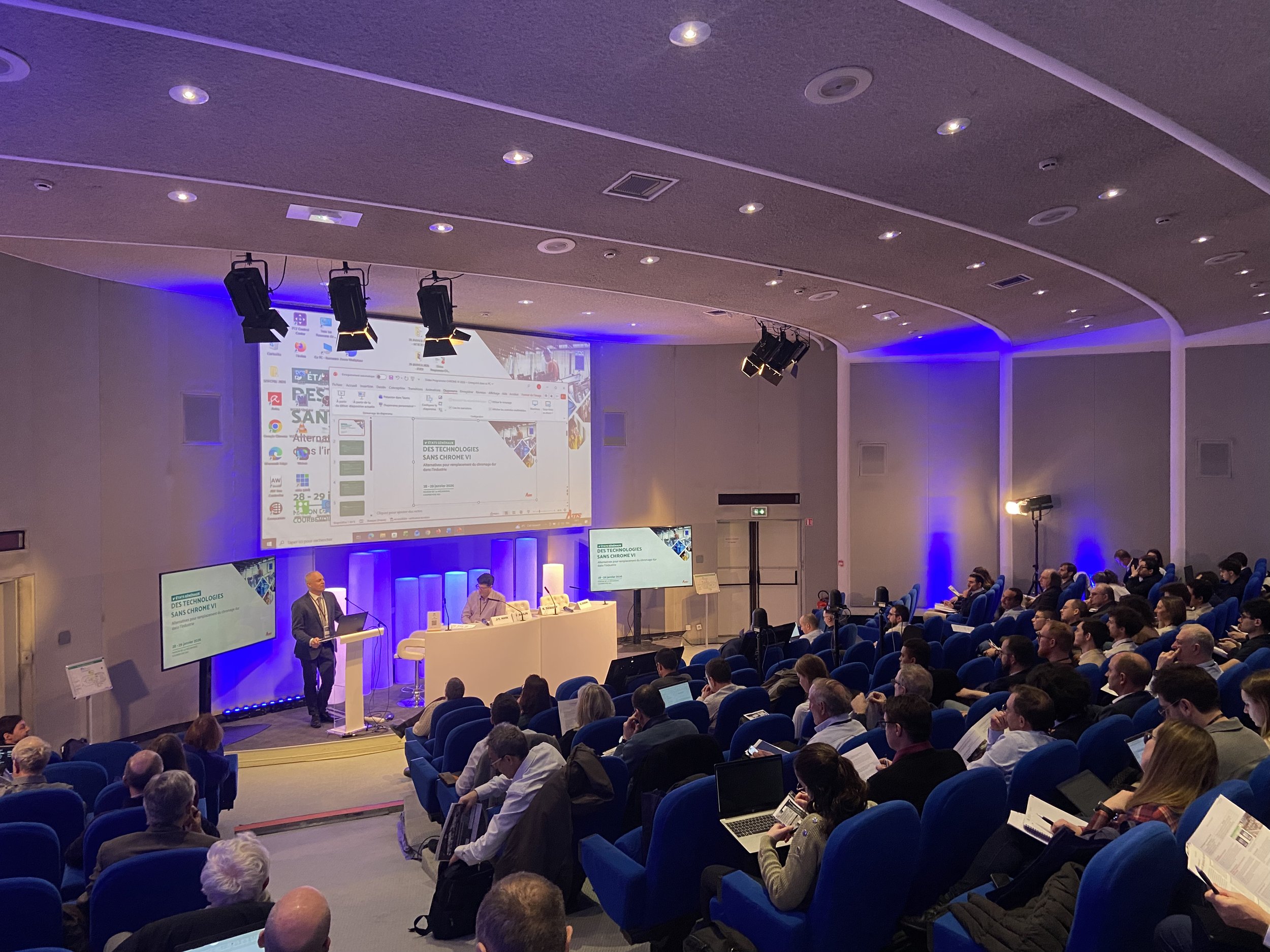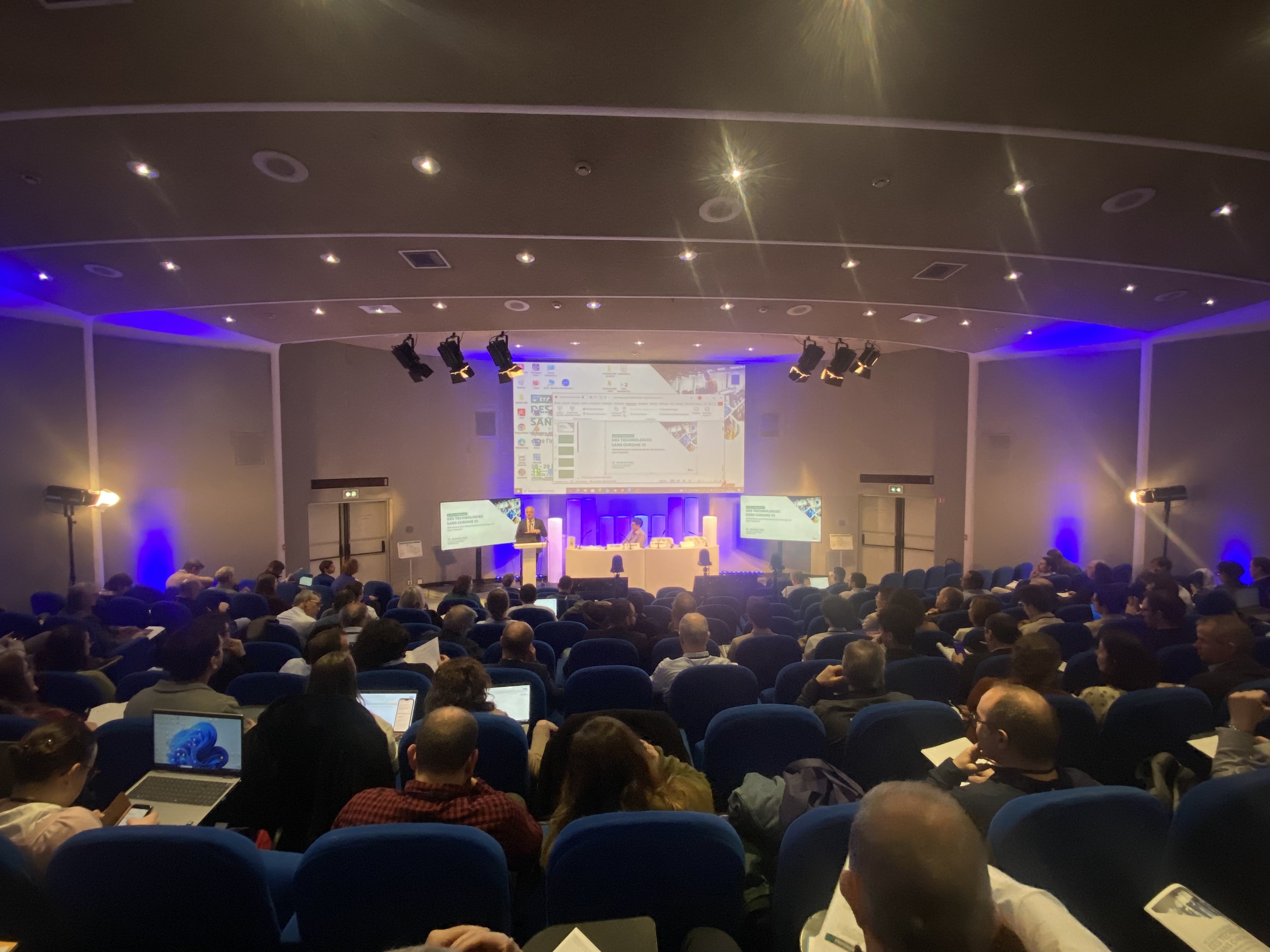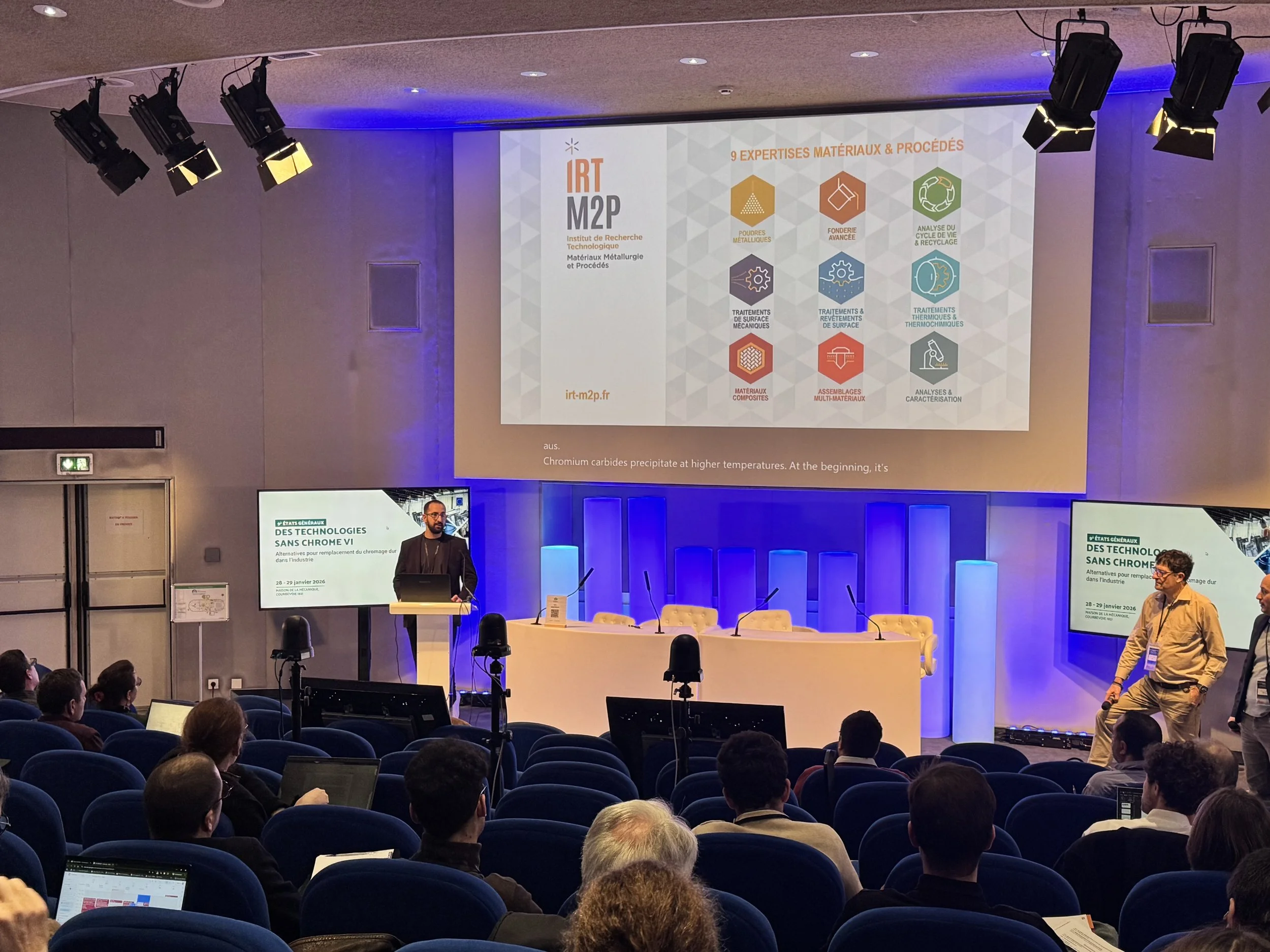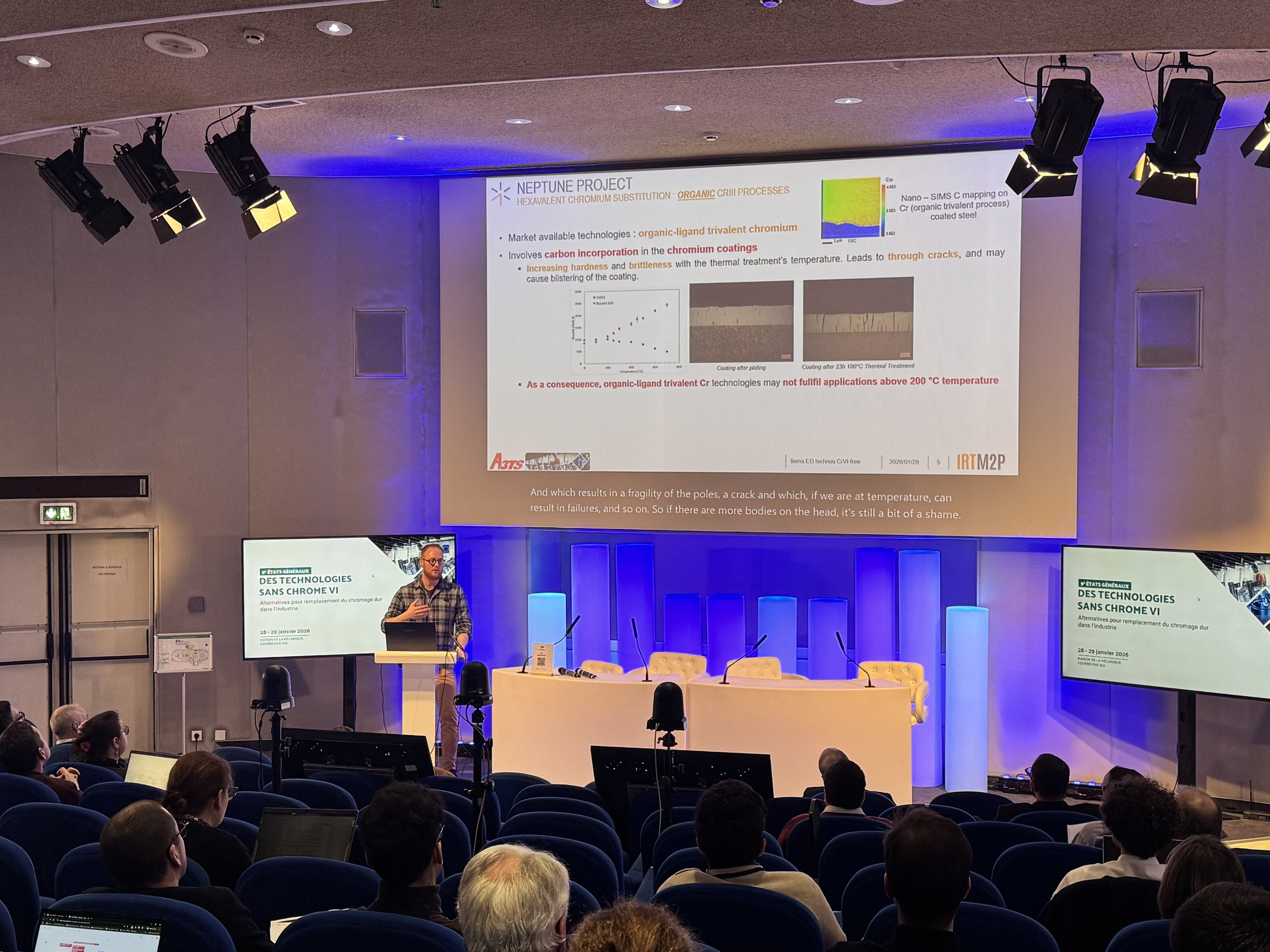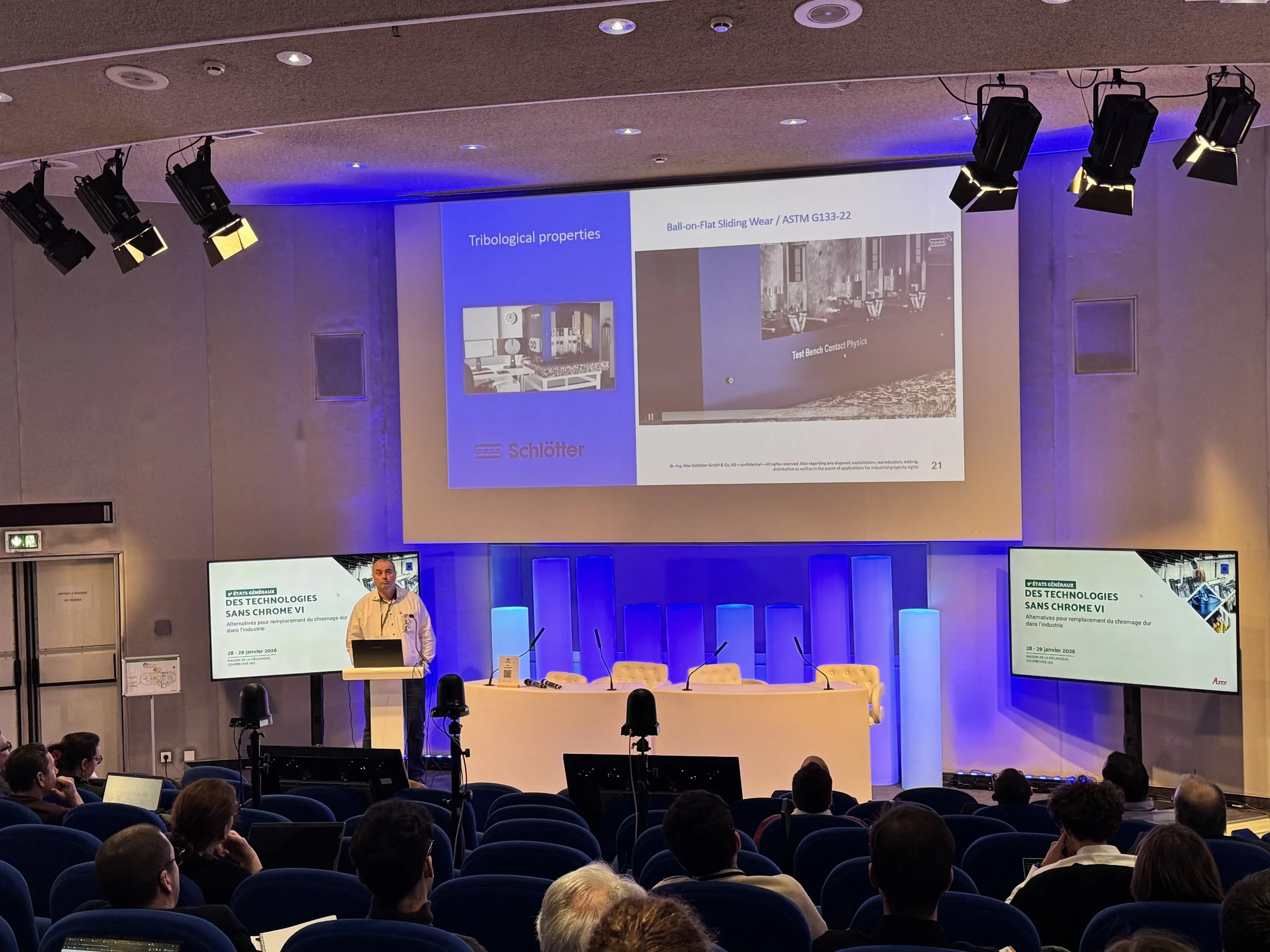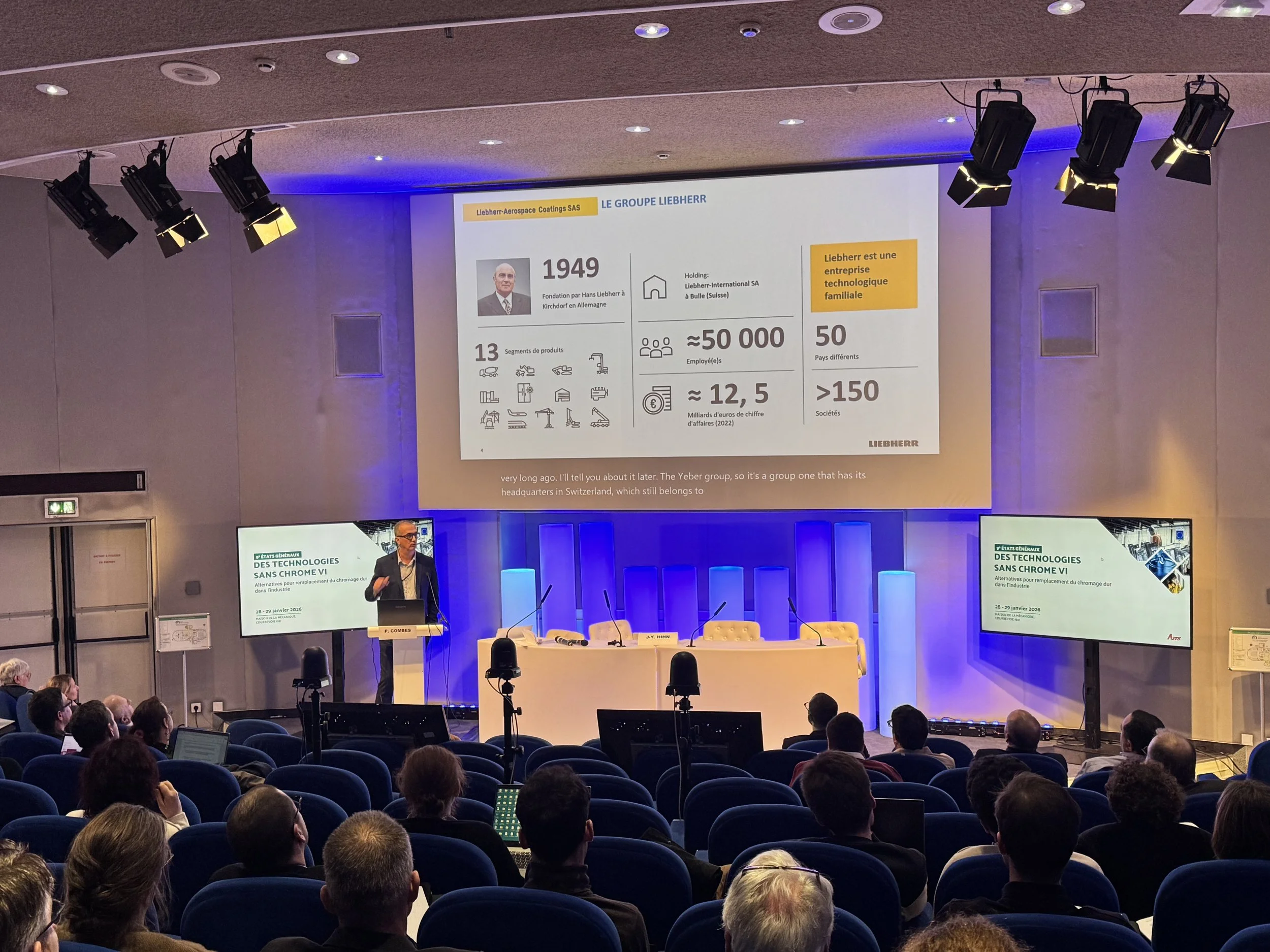
9th General Assembly on Chrome-Free Technologies VI
Success in figures:
✅ 130 participants mobilized.
✅ A satisfaction rating of 3.65/4: proof of the relevance of the discussions and the quality of the solutions presented.
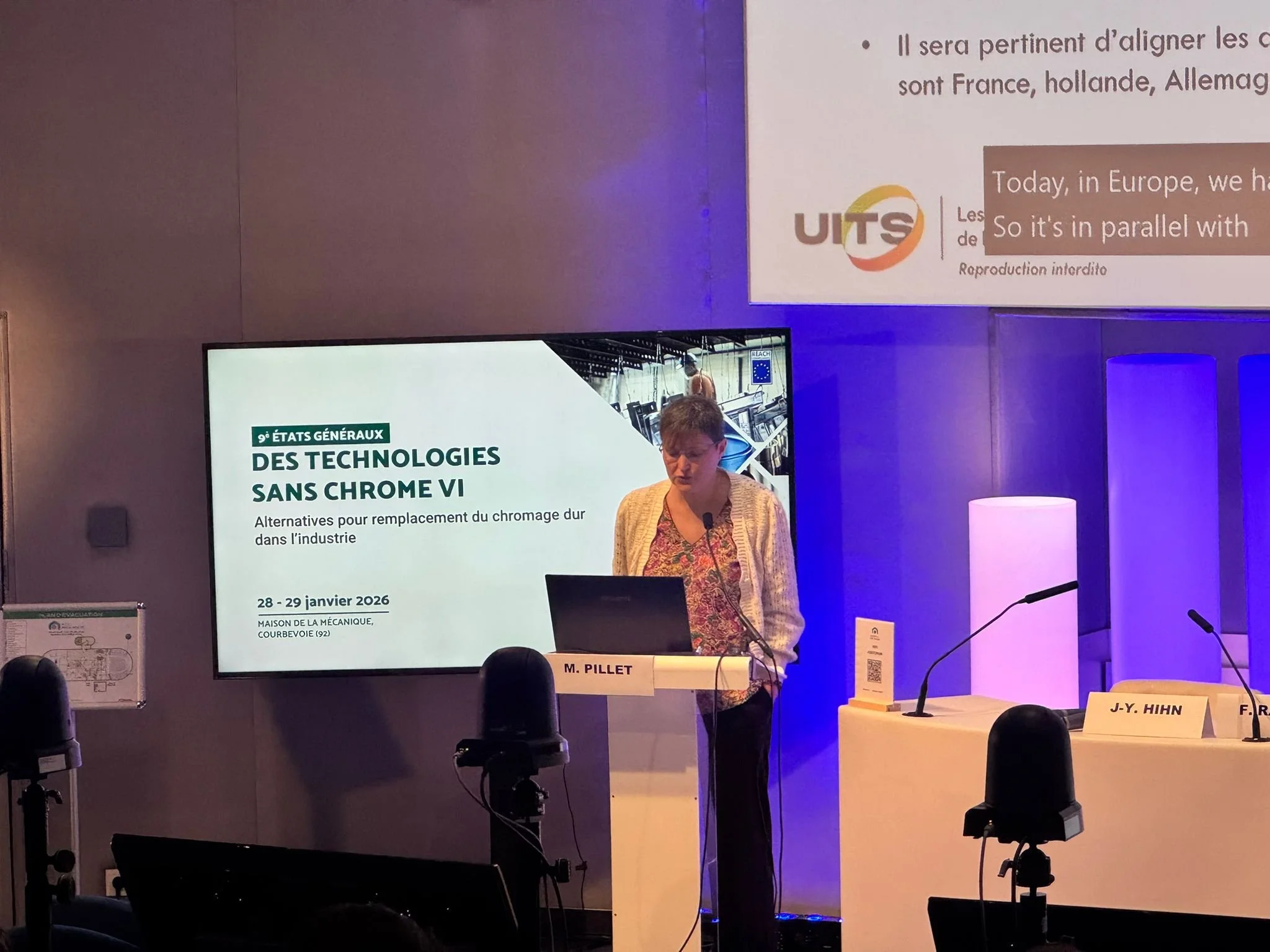
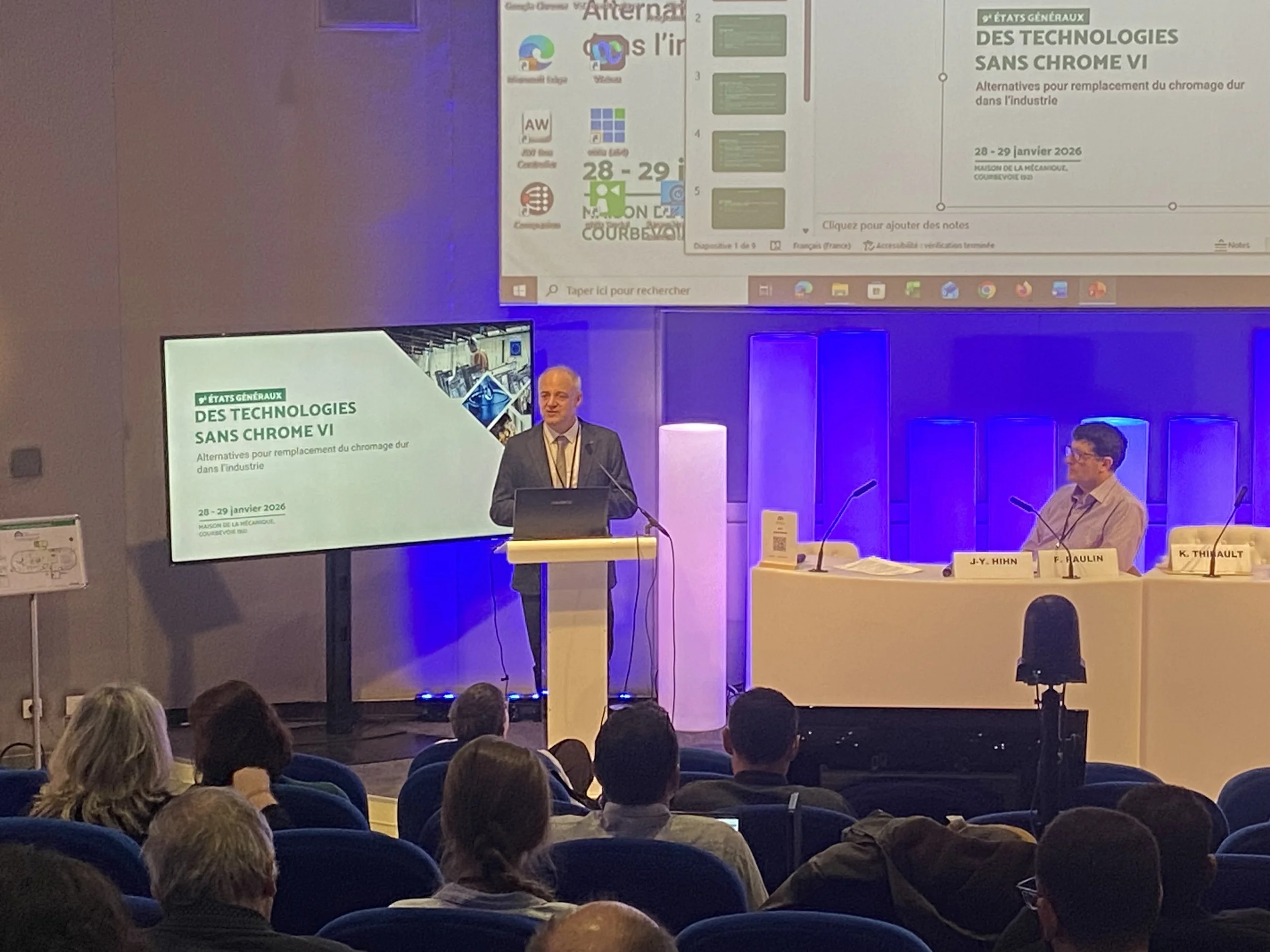
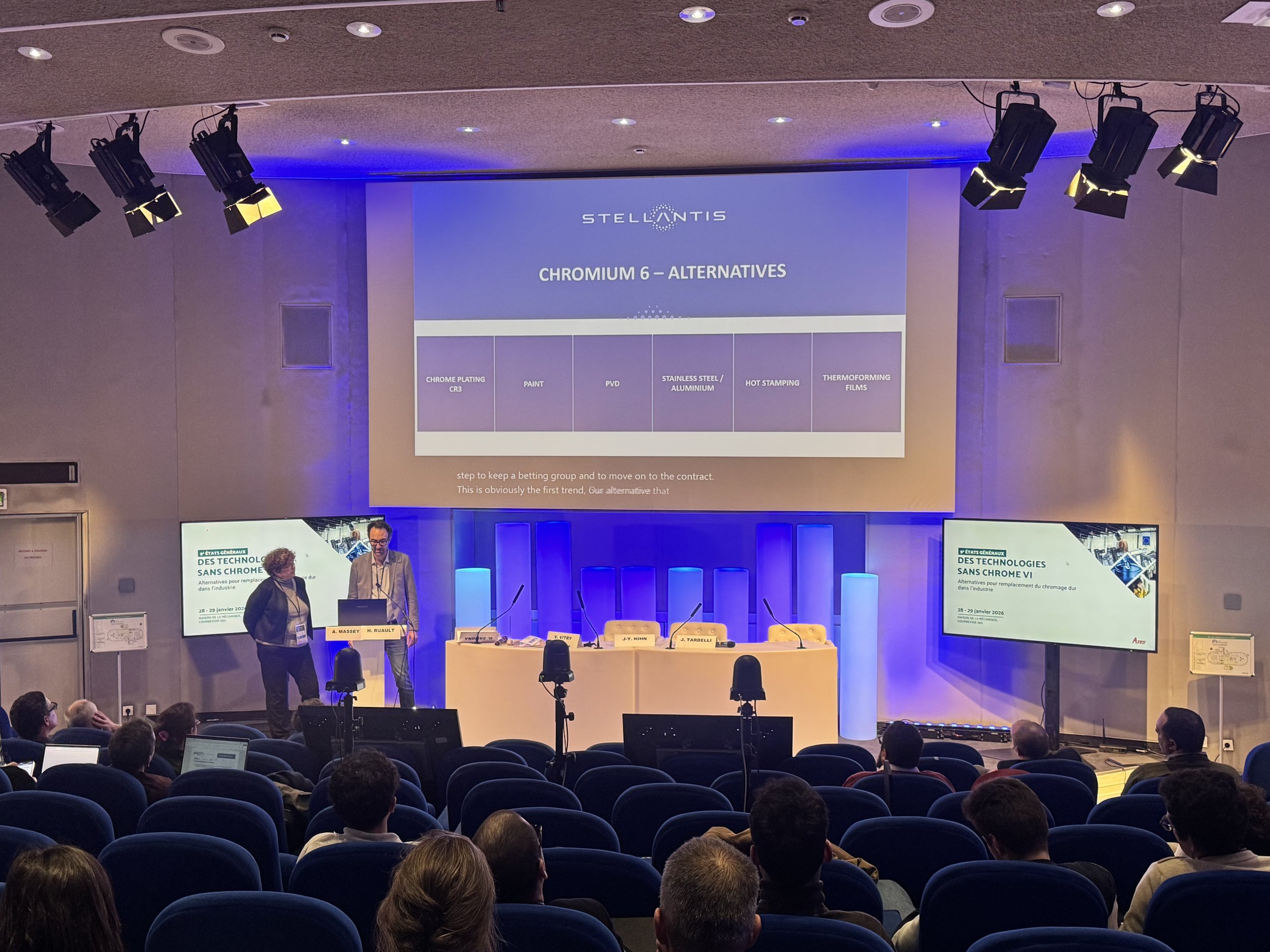
The 9th edition of the Chrome VI-Free Technologies Forum (EGTSC)—organized by A3TS—took place this year at the Maison de la Mécanique in Courbevoie, establishing itself as the must-attend event for learning about the latest regulatory and technical developments. This is a sign that the industrial concern arising from regulatory constraints is still very much alive.
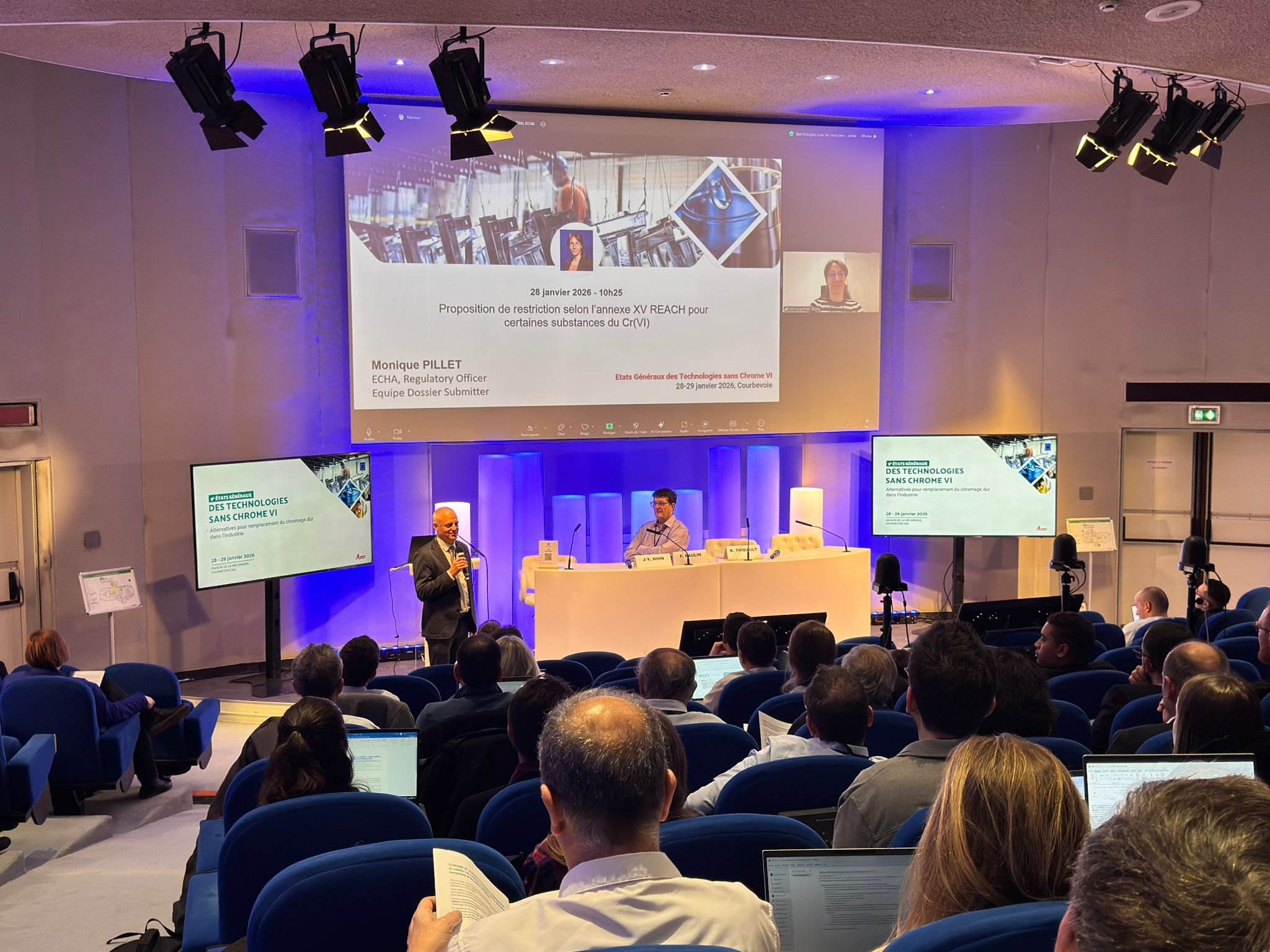
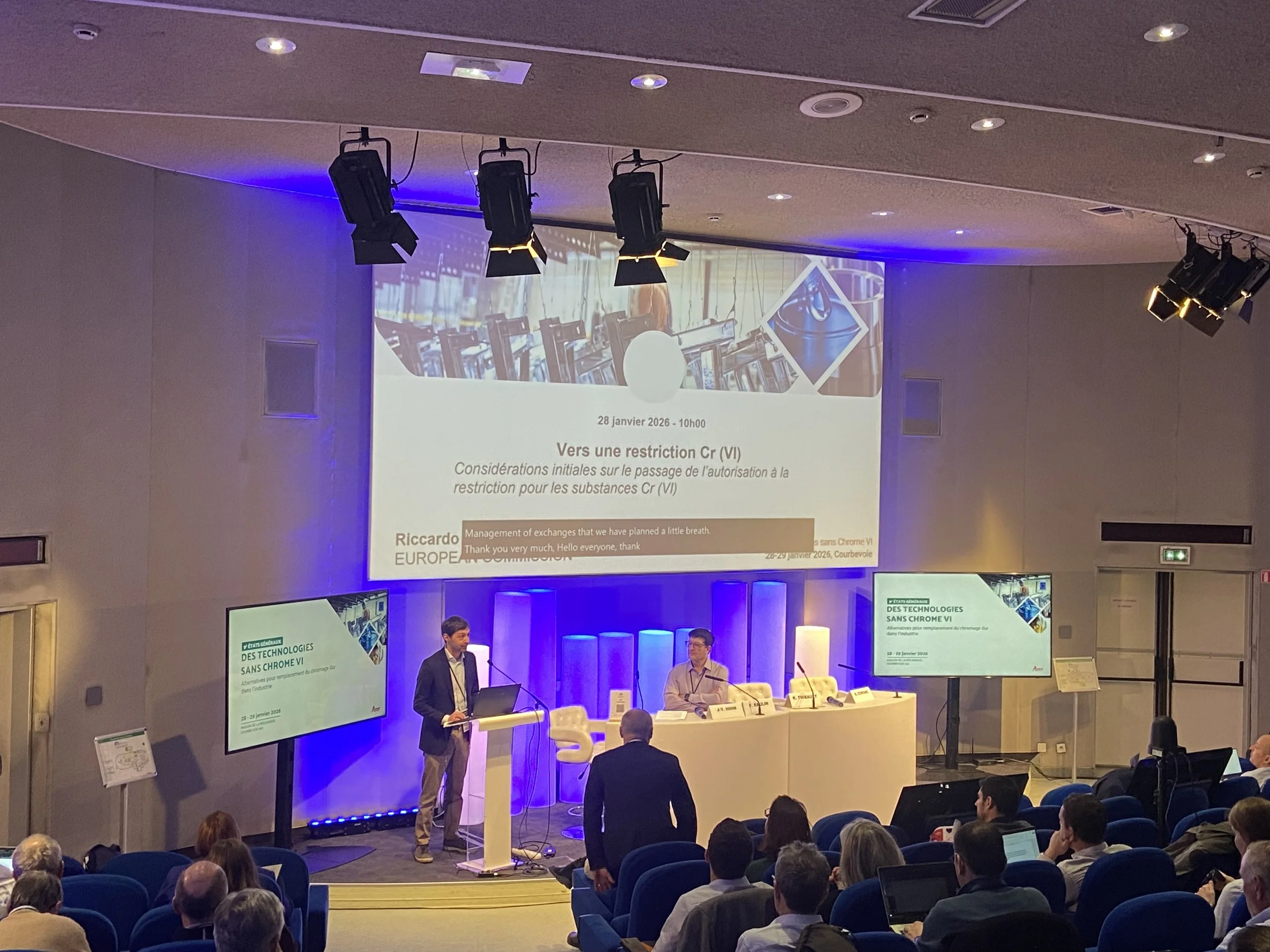
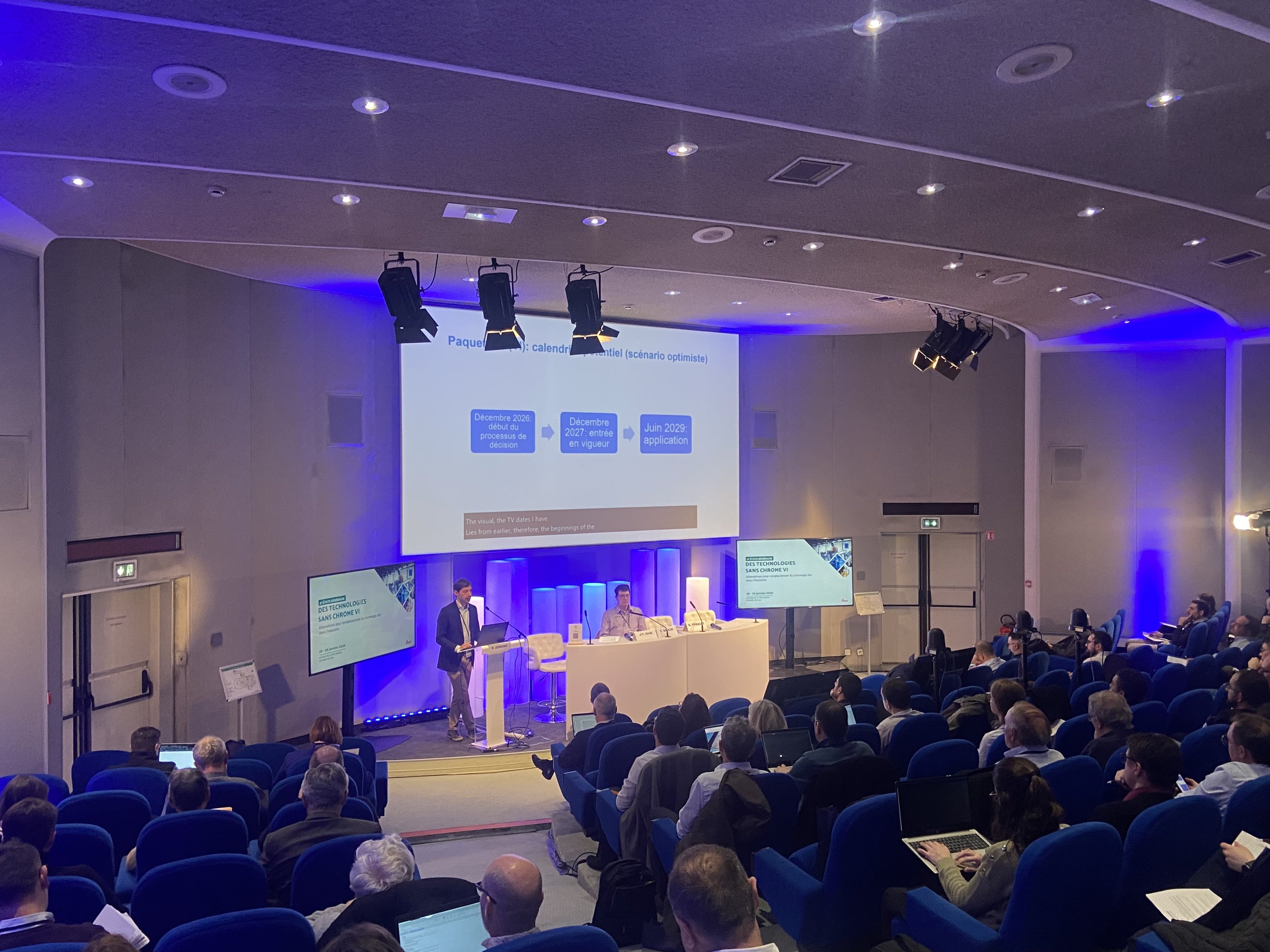
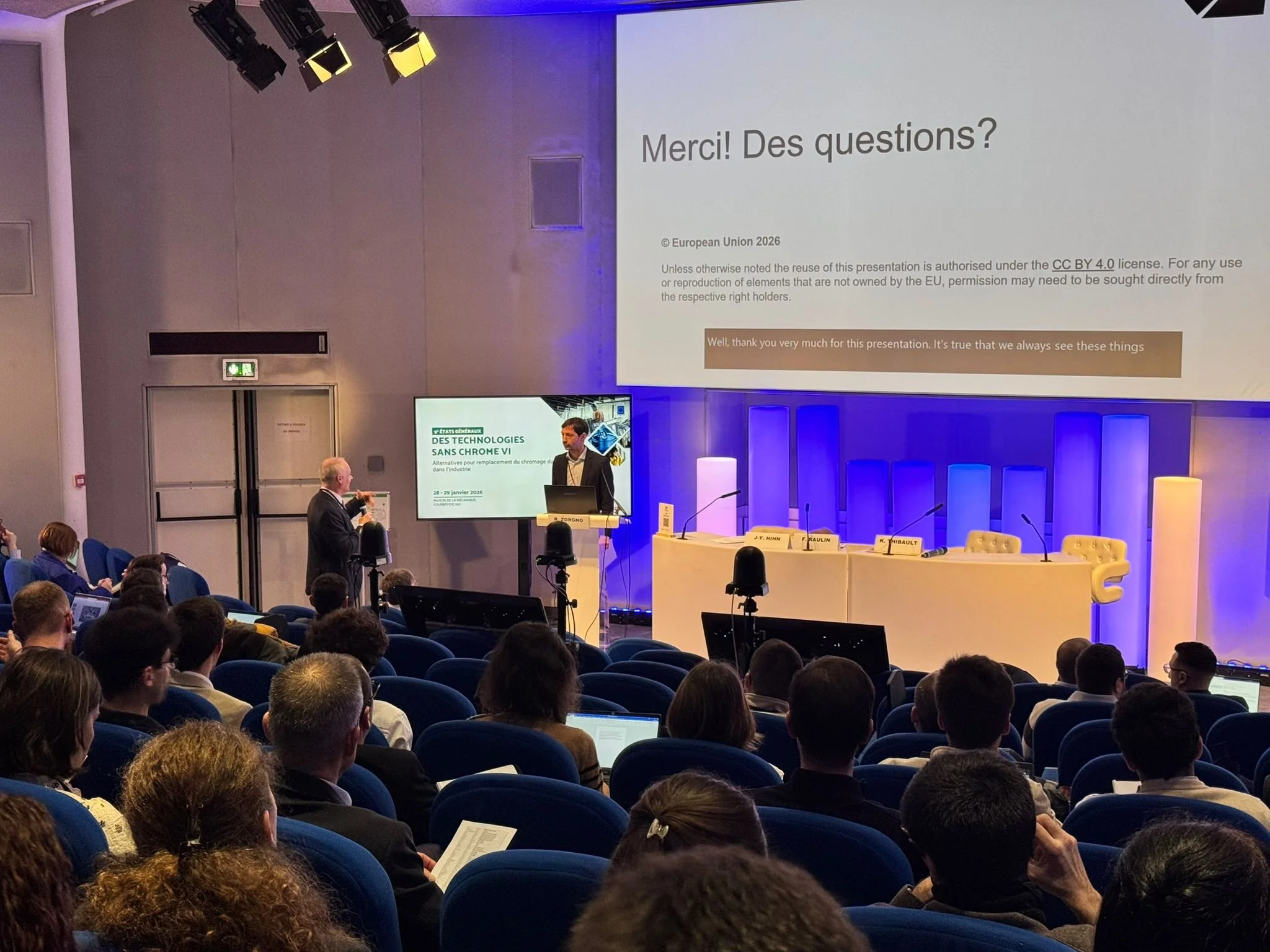
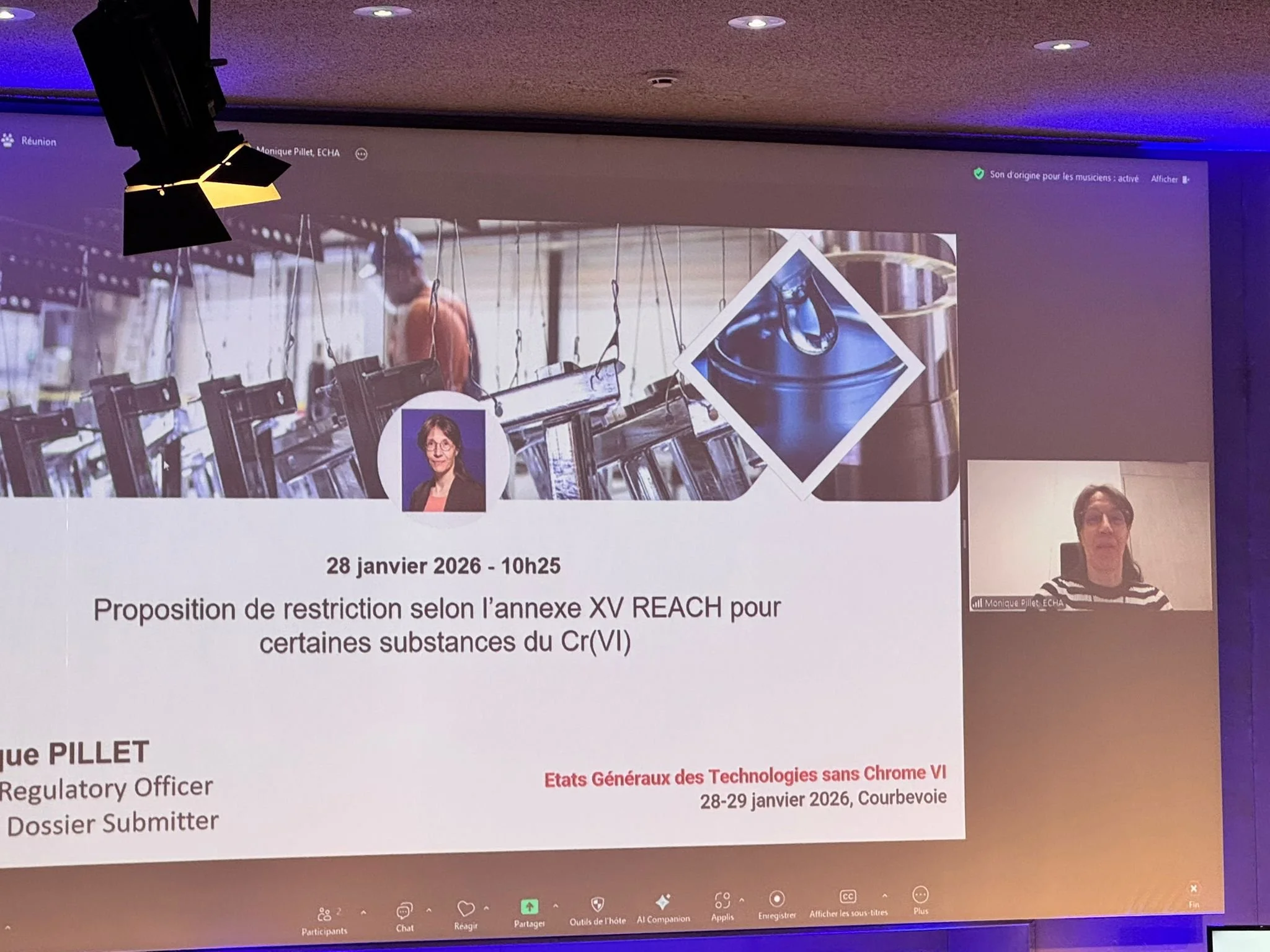
The opening session, dedicated to regulatory aspects, saw the first-ever participation of representatives from the European Commission (R. Zorgno, Legal Officer) and the European Chemicals Agency (ECHA) (Monique Pillet, Regulatory Officer). The aim was to provide an "explanation of the text" of the path that led the European authorities to abandon the authorization regime (with a number of dossiers that far exceeded the ECHA's capacity to investigate) in favor of a restriction regime. The next step was to explain how the latter was constructed, taking into account the opinions of manufacturers, health constraints, and the possible consequences in terms of operating constraints. To date, different scenarios coexist, with particularly stringent exposure and release limits, highlighting the need for qualified measurement methods and protocols, as demonstrated by Bureau Veritas.
This provoked a strong reaction from the audience, who were able to engage in a free exchange with the speakers, especially industrialists who have spent a lot of time complying with regulations, through substitutions or authorization requests... The cost of this can distort competition with industries located outside the European Union, as Anne-Sophie Maze of the Union des Industries des Traitements de Surface (UITS) points out.
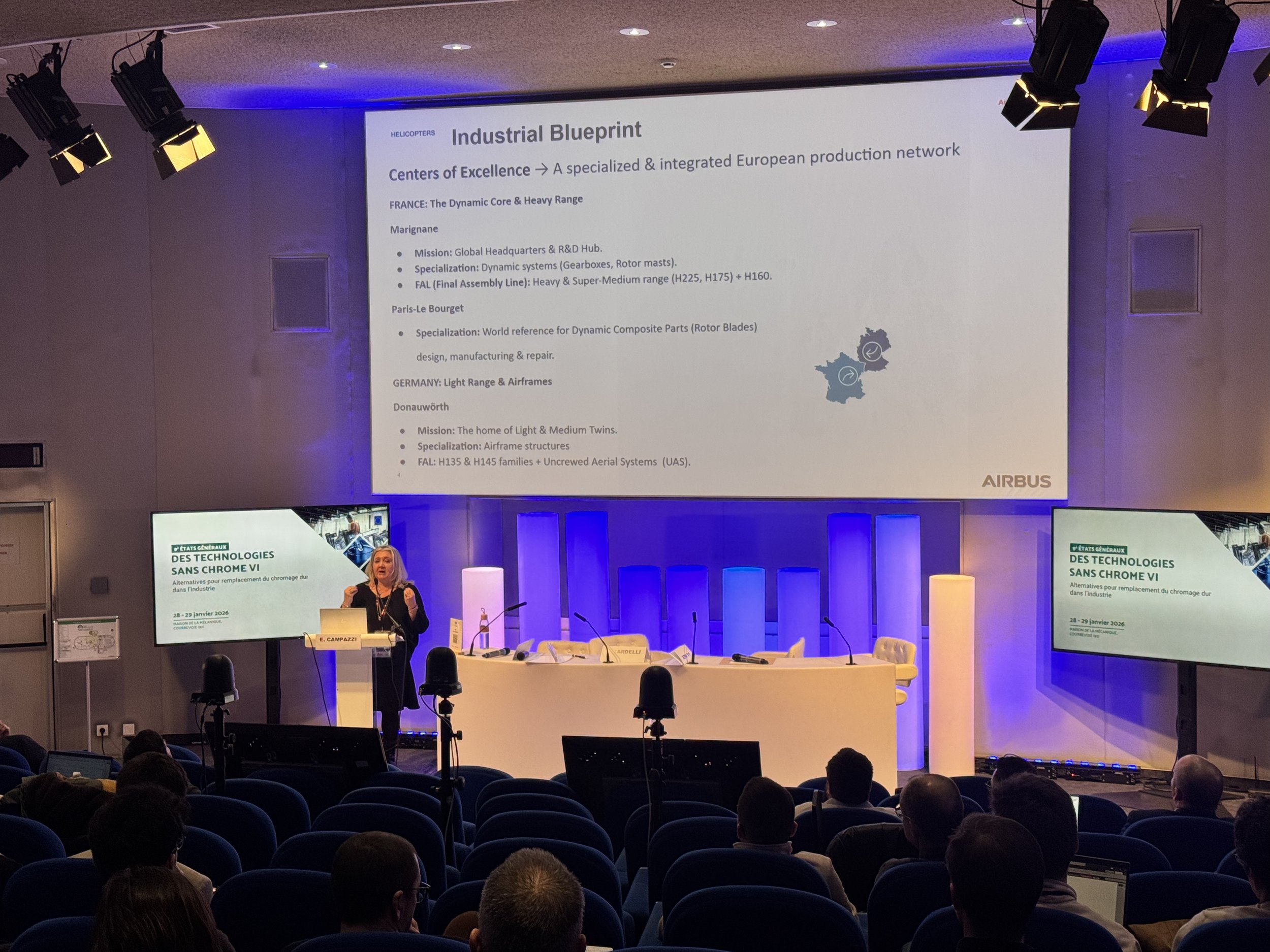
Major contractors (Airbus Helicopters, Stellantis, Framatome, Naval Group, Safran) took part to unveil their roadmaps and explain how they were approaching these regulatory changes. While many highlighted the very high costs associated with finding alternatives, which are still difficult to replace identically for hard chrome, for example, and the many uncertainties involved, but the initiative has also had positive consequences in terms of reviewing practices and enabling companies to consider the strategies they should implement with regard to hazardous substances, such as the cross-functional HazMat (Hazardous Materials) program launched in 2011 by Airbus Helicopters, which has resulted in more than 70 projects currently underway within the group....which could be an advantage at a time when, like Dörken Coatings, we are wondering what to do about PIFAS, because one regulation hides another...
Beyond legislative constraints, there is a clear desire to reduce the impact of processes on the environment and operators. But the technical challenges are considerable, requiring determination, effort, and a certain amount of pragmatism... In addition to their inherent qualities, hexavalent chromium-based treatments are universal in nature, resulting in a wide range of applications and just as many alternatives to varying degrees.
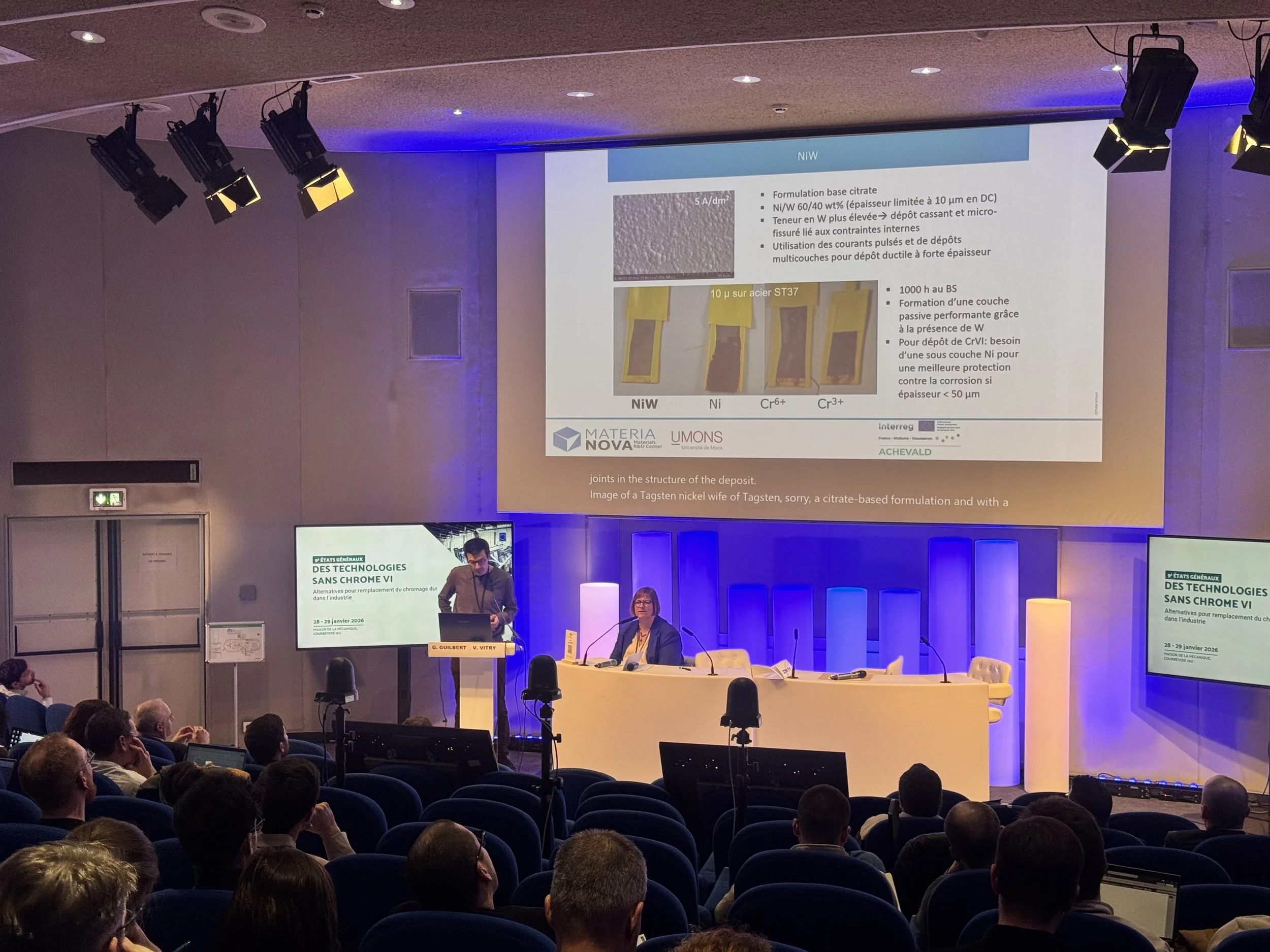
The progress update on these alternatives was the focus of discussions that continued throughout the two days, with presentations covering all areas, from hard chrome to plastic metallization. Even when technical solutions exist, for paints (Airbus Helicopters) or light alloys (GIT-Liebherr, Socomore, SurTec), testimonials of complete substitution have shown that industrial deployment has not been plain sailing. The greatest difficulties remain the substitution of hexavalent chromium in the case of hard chrome coatings. Experts have come forward with alternative proposals (University of Mons, Materia Nova, HEF) and unprecedented advances in the use of trivalent chromium. For the first time, the properties of these products are approaching the most demanding specifications (IRT M2P, Schlötter, TEM).
Faced with these challenges, does the search for dialogue by representatives of European authorities, with, for example, a possible review of the restriction clause after its enactment, offer any hope for greater peace of mind? See you in two years at the 10th General Assembly on Chromium VI-Free Technologies to take stock of the situation.
Prof. Jean-Yves HIHN, Chairman, Mr. Frédéric RAULIN Co-Chairman
Prof. Véronique VITRY, Dr. Joffrey TARDELLI, members of the scientific committee of the États Généraux des Technologies sans Chrome VI (Chromium-Free Technologies Forum VI)
They liked:
"Lotsof very interesting conferences on aviation by DG-Grow and ECHA. Well done and thank you to DG-Grow for staying after the conferences to discuss things further."
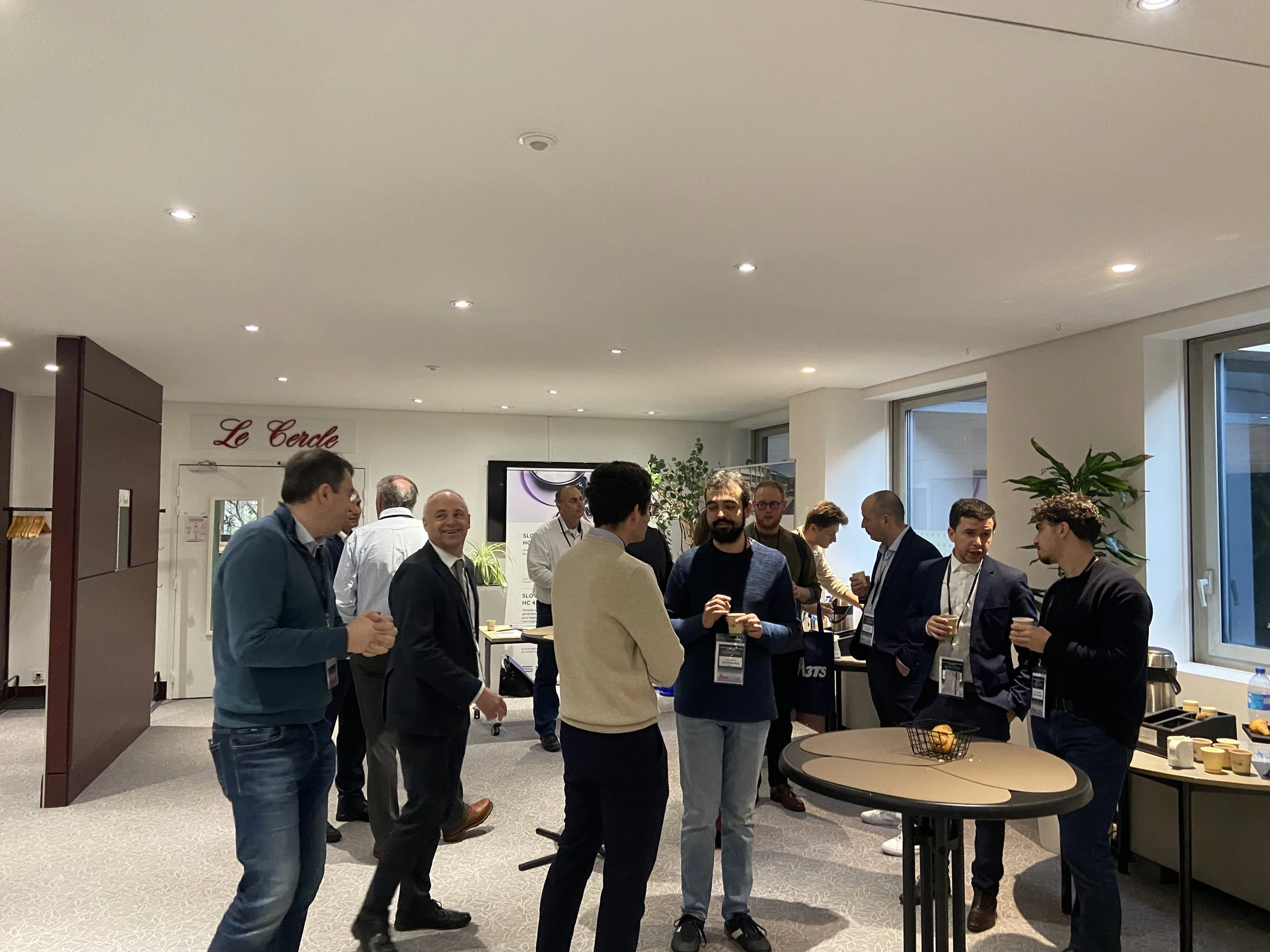
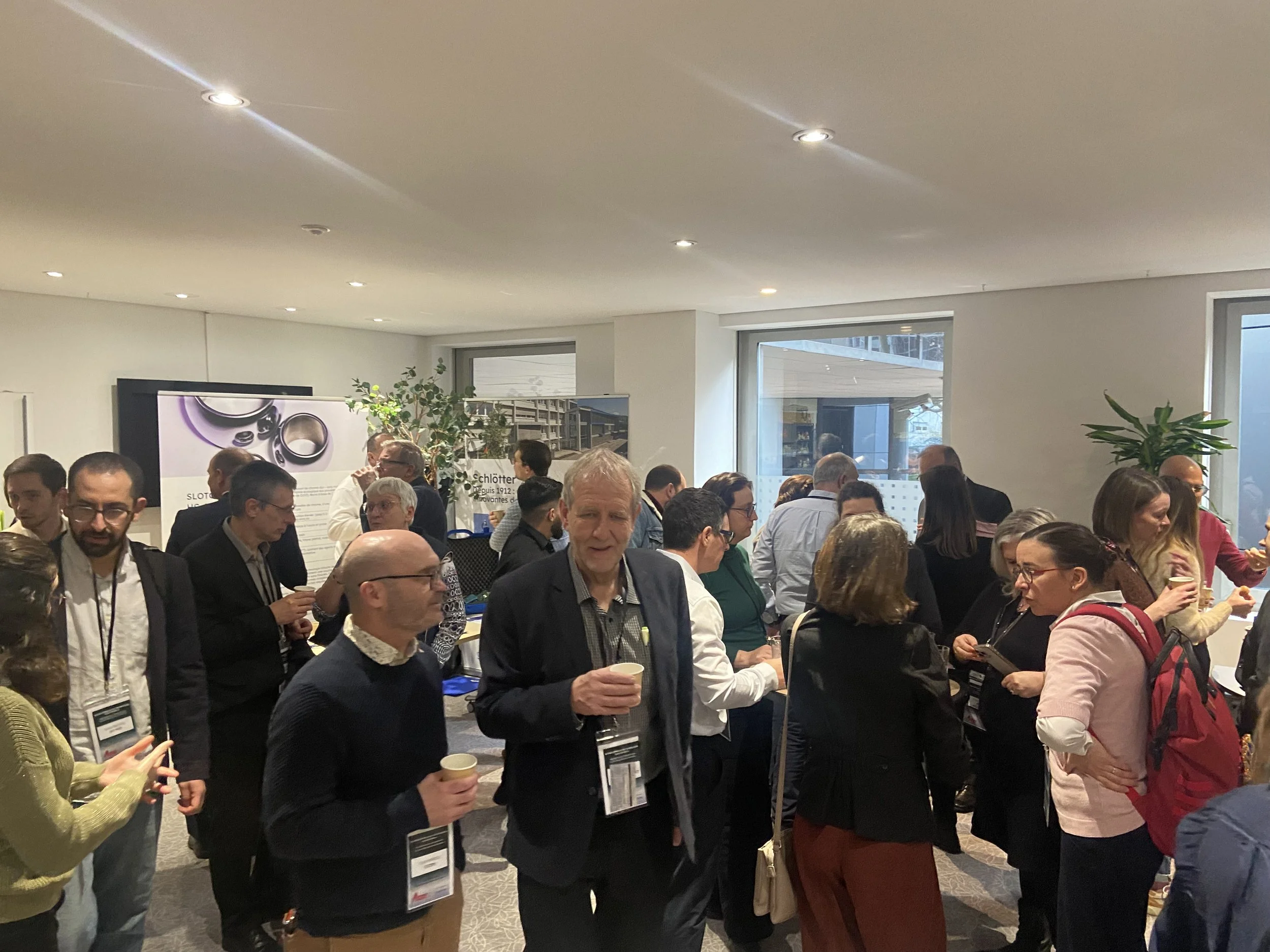
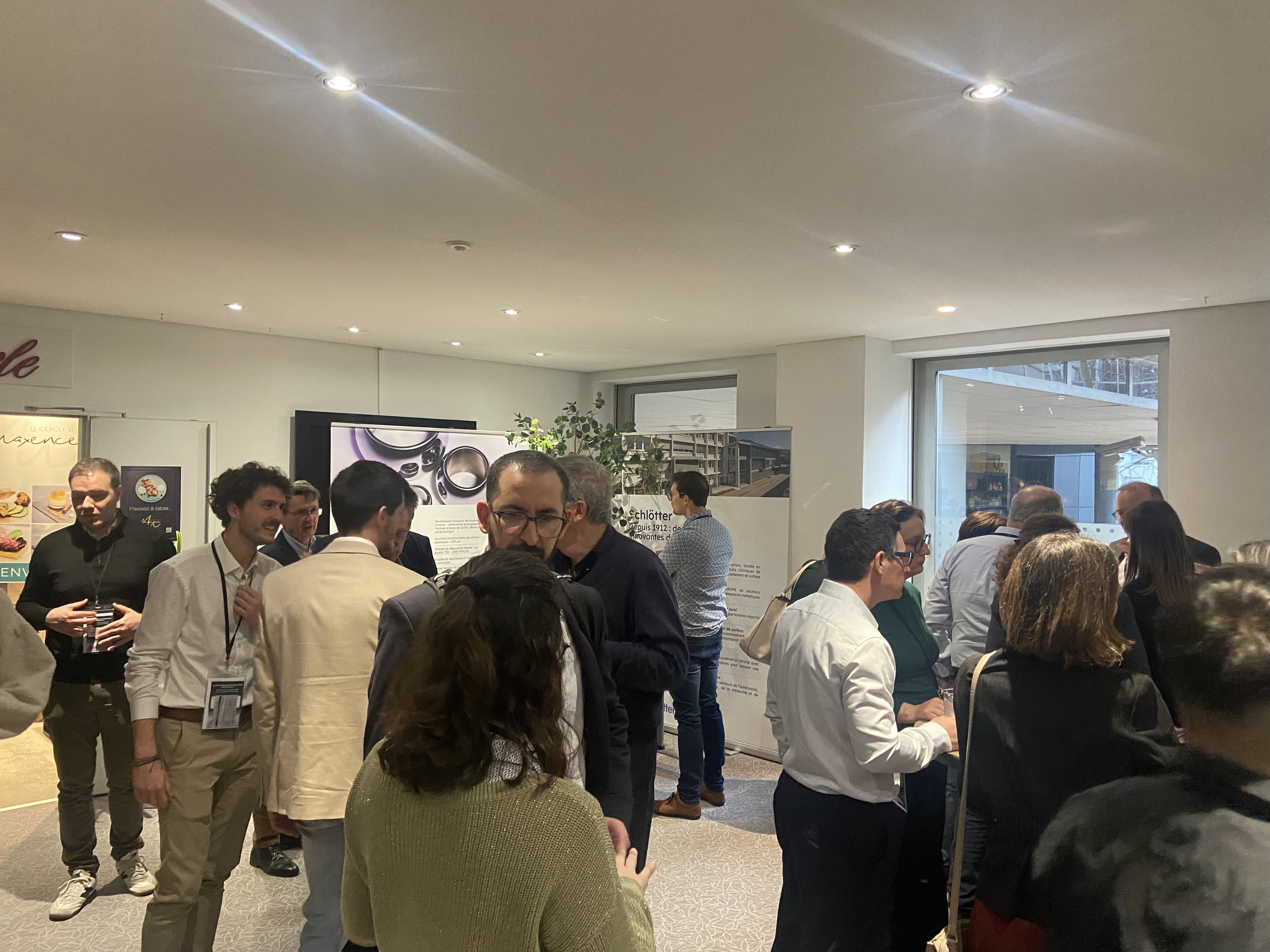
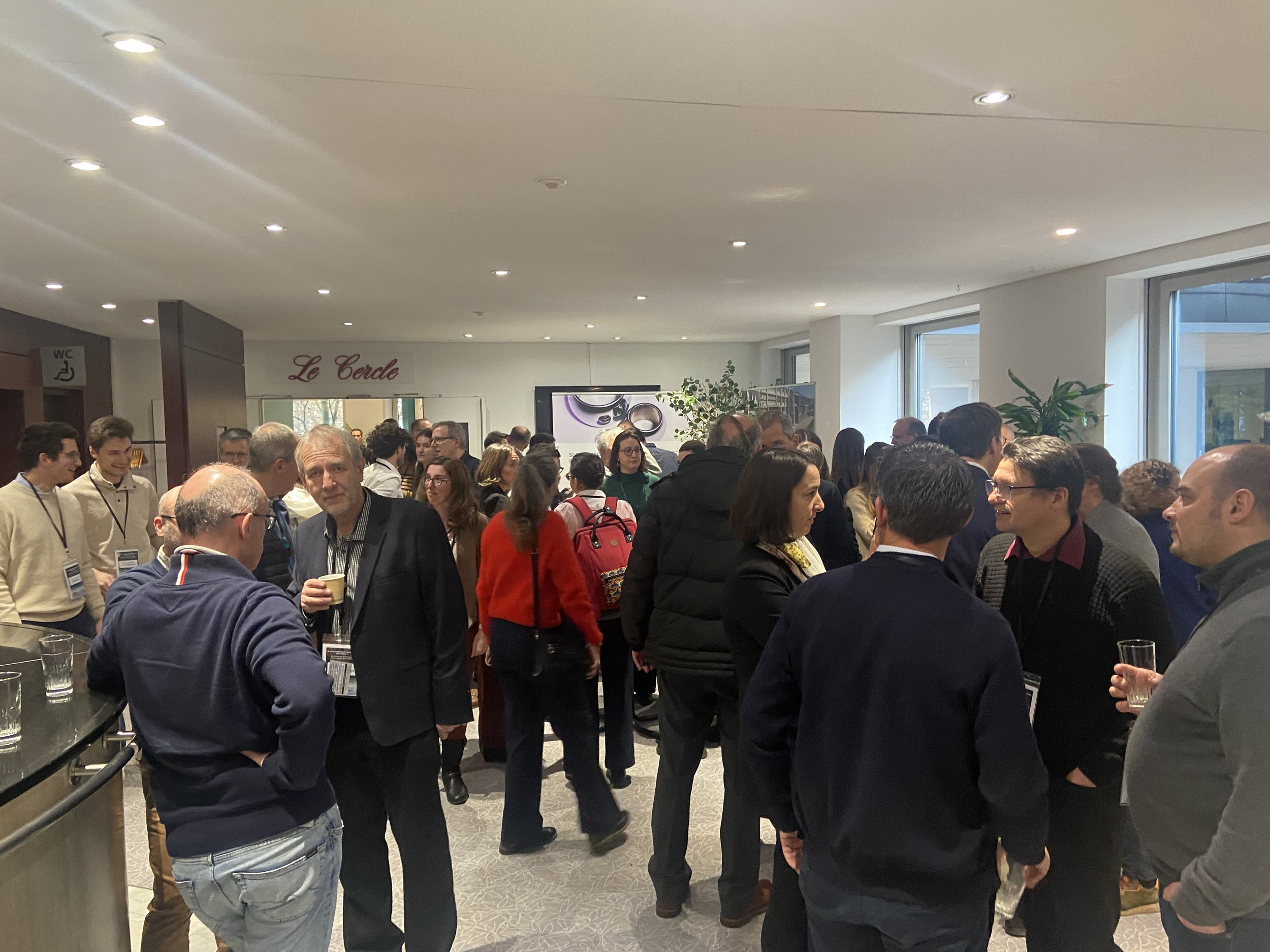
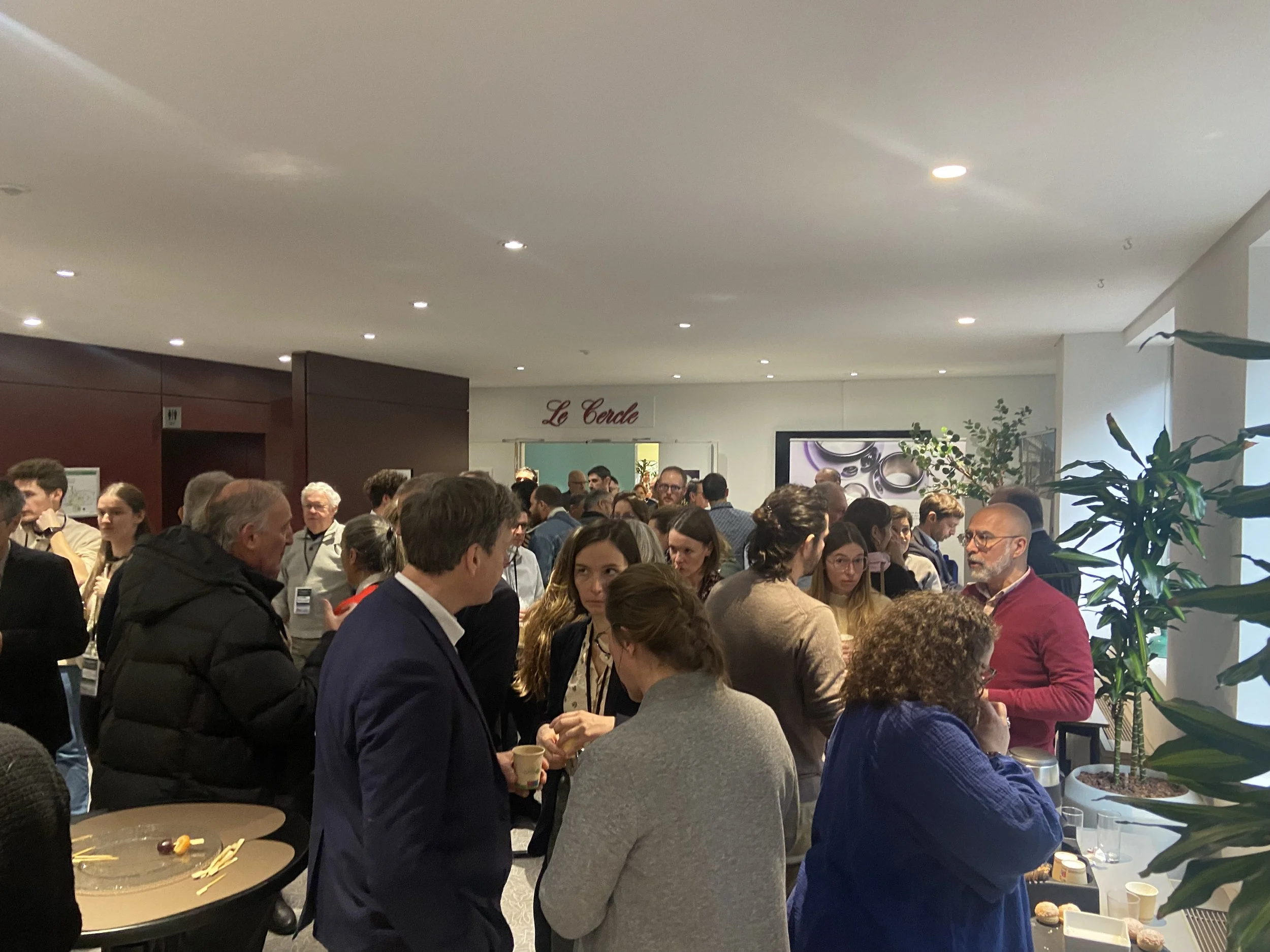
"Very pleasant lunch break, enough tables to eat at and time to chat."
"These days were extremelyvaluable, with presentations from the European Commission and ECHA."
"Thesemoments [breaks and lunches] are very important because they help to deepen discussions over the two days, which is very constructive."
"Highly relevant presenceof a representative from the European Commission throughout the conference. Good balance between regulation/public research/contracting authorities/TS suppliers."